Grand Canyon Live Webcams: Watch Sunrise, Storms & the Rim 24/7
Watch the Grand Canyon live on webcam — Yavapai Point views, sunrise and sunset, canyon depth and layers visible, monsoon storms, and weather conditions streaming 24/7.
The Grand Canyon does something that almost no other landscape on Earth can do: it makes time visible. The layered rock walls descending more than a mile below the rim represent nearly two billion years of geological history, and every shift in light — every sunrise, every passing cloud, every storm — reveals those layers differently. Watching it happen live on a webcam is surprisingly close to being there. The scale comes through. The silence does not, but the drama does.
Port of Cams streams the Grand Canyon from the South Rim, and this guide covers what you can see, when to watch, and what to look for as the seasons change across one of the most photographed landscapes in the world.
Yavapai Point: The South Rim Webcam
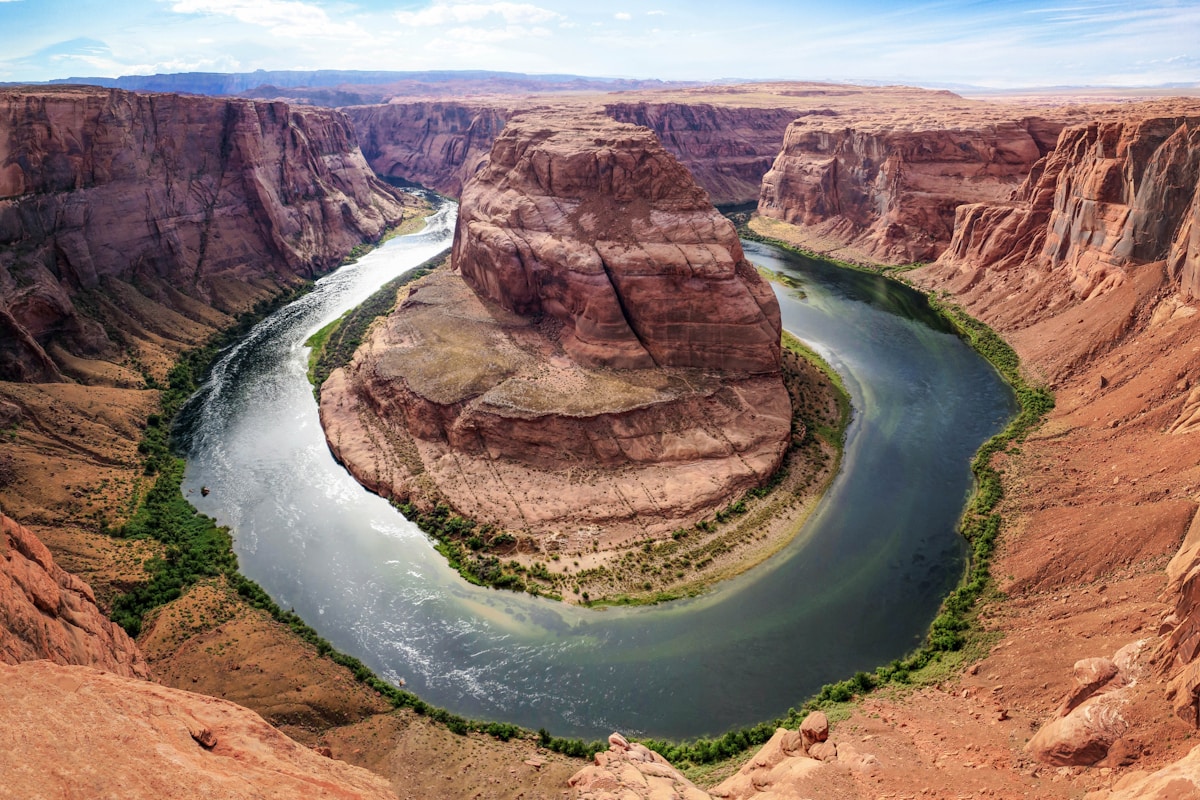
The primary Grand Canyon webcam sits at Yavapai Point on the South Rim, one of the most iconic overlooks in the entire national park system. At roughly 7,260 feet elevation, Yavapai Point juts out over the canyon and provides an unobstructed view that extends across the inner gorge to the North Rim — a straight-line distance of about 10 miles, but a visual depth that drops more than 5,000 feet from where the camera sits to the Colorado River below.
From this vantage point, you can pick out distinct geological layers that tell the canyon’s story. The pale Kaibab Limestone at the rim gives way to the cream-and-tan Coconino Sandstone, then the red Hermit Shale, the cliff-forming Redwall Limestone, and down into the dark Vishnu Schist at the bottom — some of the oldest exposed rock on the planet. These are not abstractions on a webcam. When the light is right, the color banding across the canyon walls is vivid even on a screen.
What to watch for: The interplay of light and shadow is the main event. As the sun moves, shadows creep across buttes and temples inside the canyon, revealing formations that were invisible an hour earlier. Side canyons that look flat in midday sun become deep gashes in early morning light. The webcam captures this continuous transformation better than most photographs do, because you can watch it unfold in real time.
Sunrise and Sunset: When the Canyon Changes Color
If there is one reason to bookmark a Grand Canyon webcam, it is the light. The canyon faces roughly east-west, which means sunrise and sunset rake light across the walls at low angles, lighting up the rock layers in colors that shift by the minute.
Sunrise
Sunrise at the Grand Canyon is not subtle. The first light hits the North Rim and the upper rock layers while the inner canyon remains in deep shadow. Over the next 30 to 45 minutes, the light works its way down the walls, turning them from cool blue-gray to gold to deep orange to red. The Redwall Limestone — which is actually gray rock stained red by iron oxides washing down from above — earns its name most honestly at sunrise, when it glows.
Sunrise times at the South Rim range from about 5:15 AM in June to 7:30 AM in December (Mountain Standard Time — Arizona does not observe daylight saving time, which is one less thing to calculate). The best window is roughly 15 minutes before sunrise through 45 minutes after.
Sunset
Sunset reverses the process but adds its own character. The western-facing walls catch the last direct light while the eastern walls fall into shadow. The warm tones deepen as the sun drops — the canyon goes through gold, amber, copper, and finally a deep purple before the light is gone entirely. On evenings with high clouds, the sky above the canyon can turn colors that look exaggerated but are not.
The 20 minutes after the sun drops below the horizon — the blue hour — are worth watching too. The canyon takes on a cool, almost otherworldly quality, with the rock layers reduced to silhouettes and the sky still holding color.
Golden Hour Photography Timing
Photographers who have been to the Grand Canyon know that the best shots happen in a narrow window. What the webcam gives you is a way to study those windows without spending five days on the rim. Watch the feed at sunrise and sunset across different weeks and seasons, and you will learn exactly when the light hits specific formations. That knowledge is worth more than any photography guide when you actually visit.
Monsoon Season: Lightning, Rain, and Drama
July through September is monsoon season in northern Arizona, and it transforms the Grand Canyon from a still, sun-baked landscape into something out of a nature documentary. Moisture surges up from the Gulf of Mexico and the Gulf of California, and the afternoon heat over the canyon creates powerful updrafts that build towering cumulonimbus clouds.
Here is what monsoon season looks like on the webcam: a clear morning gives way to cumulus clouds building along the rims by late morning. By early afternoon, those clouds have stacked into dark, anvil-topped thunderheads that can tower 40,000 feet or more above the canyon. Then the storms break — sometimes directly over the canyon, sometimes along the rims, sometimes marching across the plateau in visible curtains of rain called virga that evaporate before reaching the canyon floor.
Lightning: The Grand Canyon during an electrical storm is one of the most dramatic things you can see on any webcam anywhere. Lightning strikes the rim, illuminates the canyon interior in split-second flashes, and arcs across the sky above the buttes. Because the canyon is so deep and the storms so high, the scale of the lightning becomes apparent in a way that flat-terrain storms never achieve.
Flash floods: After heavy rain, waterfalls appear on the canyon walls — temporary cascades that pour red-brown water over cliff faces that are dry 350 days a year. The webcam may not catch every one, but you can often see the haze and mist from larger falls and the red-brown runoff staining the rock faces.
Best monsoon watching: Weekday afternoons, roughly 1:00 PM to 5:00 PM MST. Storms tend to build from the south and southwest and move across the canyon. Not every afternoon produces storms, but during active monsoon periods, the buildup alone is worth watching.
Winter: Snow, Inversions, and Rare Spectacles
Winter at the Grand Canyon is underappreciated, and the webcam makes a strong case for paying attention to it. The South Rim sits at over 7,000 feet, which means it receives regular snowfall from November through March. Snow on the rim with the red rock canyon below is a striking contrast — white ponderosa pines lining a cliff edge above warm-toned rock walls that drop a mile into the earth.
Temperature Inversions
The rarest and most spectacular thing the Grand Canyon webcam can show you is a temperature inversion — a weather event where cold air sinks into the canyon and warm air traps a layer of fog or low cloud inside it. The result: the entire Grand Canyon fills with a sea of white cloud, with only the tallest buttes and temples poking through like islands. The rim becomes a coastline overlooking an ocean of fog.
Full inversions happen only a handful of times per year, typically in late fall and winter when conditions align just right — clear skies overnight, calm winds, and enough moisture for fog to form. Partial inversions, where fog fills part of the canyon or hugs certain layers, are more common and still remarkable. The webcam is the best way to catch one because they often form overnight and can dissipate by midmorning.
If you see fog building in the canyon on the webcam in November, December, or January, keep watching. You might be about to witness something that draws national news coverage when it happens.
Winter Light
Winter also brings the lowest sun angles of the year, which means the longest shadows and the most dramatic interplay of light and dark across the canyon walls. Midday in winter can look like golden hour in summer. The snow on the rim adds a cool-toned frame to the warm canyon below. Overcast days create even, diffused light that brings out the subtle color differences between rock layers.
Spring: Clear Skies and Wildflowers
Spring at the Grand Canyon — roughly March through May — brings some of the clearest viewing conditions of the year. Winter storms taper off, the air is dry, and visibility can exceed 100 miles on good days. On the webcam, this translates to sharp, detailed views where you can pick out individual rock formations on the North Rim.
The South Rim sees wildflowers in April and May, particularly along the rim trail near Yavapai Point. Claret cup cactus, Indian paintbrush, and lupine add splashes of color to the foreground. The canyon itself remains relatively static in spring, but the quality of light and air clarity make this a peak viewing season.
Spring is also when the North Rim begins its transition from snowbound to accessible. The North Rim road typically opens May 15 and closes with the first heavy snow in late October or November. The webcam at Yavapai Point faces north, so you can watch the snow line retreat across the North Rim plateau through spring.
Trip Planning: What the Webcam Tells You
A Grand Canyon webcam is one of the most practical trip-planning tools available, and it is free. Here is what you can learn from watching:
Weather conditions in real time. The Grand Canyon is 5 to 7 hours from the nearest major airports (Phoenix and Las Vegas). If you are driving in tomorrow, pulling up the webcam today tells you whether the rim is clear, snowy, foggy, or storm-battered — and whether you need to adjust your plans.
South Rim vs. North Rim timing. The South Rim is open year-round and sits about 1,000 feet lower than the North Rim. The North Rim, at 8,200 feet, gets significantly more snow and has a shorter season. Watching the webcam gives you a real-time sense of conditions on the South Rim, and since you can see the North Rim in the distance, you get a general read on conditions there too.
Crowd density. While the webcam is aimed at the canyon rather than the parking lot, you can sometimes gauge how busy the rim is by the number of people visible at overlooks in the frame. Summer weekends and holiday weeks are predictably packed. Weekdays in March, April, October, and November tend to be the sweet spot.
What to pack. Temperature swings at the Grand Canyon are significant. Summer days can hit 100 degrees on the rim (and 115+ at the bottom), while winter nights drop into the teens. Spring and fall can swing 40 degrees between morning and afternoon. The webcam gives you a visual read — snow on the ground, people in jackets or T-shirts, haze or clear air — that supplements the forecast.
The Scale Problem
Every person who has stood at the rim of the Grand Canyon has said some version of the same thing: you cannot appreciate the scale until you are there. That is mostly true. But a webcam gets closer than you might expect, for one reason — you can watch weather move through it.
When a storm cell drifts across the canyon, you can see rain falling into a side canyon that you now realize is two miles deep. When a shadow crosses a butte, you can track how long it takes and begin to understand that the butte is the size of a mountain. When sunrise light takes 30 minutes to travel from the North Rim to the river, the depth of the canyon registers in a way that a single photograph never conveys.
The Grand Canyon is 277 miles long, up to 18 miles wide, and more than a mile deep. Those numbers are available in any guidebook. What the webcam gives you is the feeling of those numbers — the slow realization that what looks like a nearby cliff face is actually five miles away and 3,000 feet tall.
Watch the Grand Canyon Live
The Grand Canyon webcam streams 24/7 on Port of Cams. Pull it up at sunrise, leave it running during monsoon season, or check in on a winter morning to see if the canyon has filled with fog overnight. It is one of those feeds that rewards both quick check-ins and long, slow watching.
You can find the Grand Canyon feed along with 14,383+ other live camera feeds on Port of Cams, covering national parks, volcanoes, coastlines, wildlife, and more. The canyon is always there, always changing, and always worth a look.