Hawaii Volcanoes National Park — Complete Live Webcam Tour
Every live webcam inside Hawaii Volcanoes National Park, mapped to where you'd actually visit. USGS, NPS, and ranger station feeds — all in one place.
Hawai’i Volcanoes National Park covers 335,000 acres on the Big Island — from sea level all the way up to Mauna Loa’s 13,679-foot summit. Most of the park’s webcams are clustered around Kīlauea’s summit because that’s where the action is, but several lesser-known cams cover other parts of the park too. This is the full tour, organized by where you’d actually visit if you were on-island.
Kīlauea Summit Area (most cams, most action)
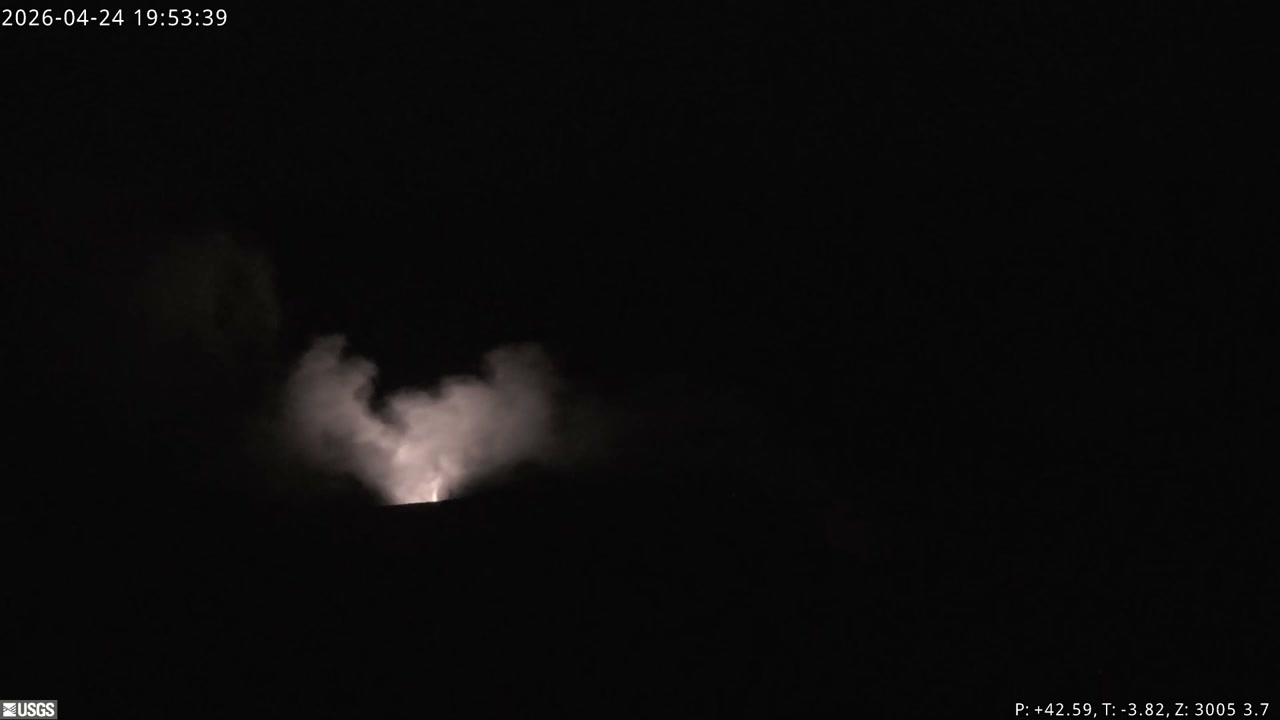
The Kīlauea summit area is where Halemaʻumaʻu crater sits, and Halemaʻumaʻu has been intermittently erupting through the 2024–2026 cycle. USGS Hawaiian Volcano Observatory operates the dense cam coverage here.
Cams from the rim
- V1cam (West Halemaʻumaʻu) — closest view of the active vent. Watch live
- V2cam (East Halemaʻumaʻu) — across the crater, scale view. Watch live
- V3cam (South Halemaʻumaʻu) — pan-tilt-zoom, USGS operators reposition during activity. Watch live
- K2cam — Uekahuna bluff, full caldera 4K wide shot. JPG snapshot updates every few minutes.
The summit area is accessed via Crater Rim Drive. Many of the overlooks (Keanakāko’i, Uēkahuna, Kīlauea Iki) where you’d watch the eruption in person are exactly where the USGS cams are mounted. So the cams give you essentially the same views you’d see from the safety railings.
Why the summit cams cluster matters
You can run two or three cams simultaneously and triangulate what’s happening. V1 close-up + V2 cross-crater = the same lava fountain from two angles, which gives you scale impossible to perceive from any single view. Combine with the USGS Volcano Notice feed and you basically have a real-time monitoring station.
Mauna Loa
Mauna Loa is the world’s largest active volcano by volume — Kīlauea’s bigger, older sibling. Last erupted November 2022 to December 2022. The summit caldera is Mokuʻāweoweo. Webcam coverage is thinner because activity is rarer.
- MKcam — Mauna Loa from Mauna Kea. Mounted up at the Mauna Kea observatories looking south. The dual-peak view is iconic; you see Mauna Loa’s flank against the sky, often above clouds. Sunrise on this cam is one of the best on the cam stack.
- MOcam — Mauna Loa south caldera. A direct view into Mokuʻāweoweo from the southern rim. Mostly quiet but if magma starts moving, this is the cam to watch.
For atmospheric science nerds, the Mauna Loa Observatory (NOAA, separate from USGS) also runs cams looking at the sky and clouds — it’s the longest continuous CO₂ measurement station in the world.
Coastal areas (Chain of Craters Road, Holei Sea Arch)
Chain of Craters Road descends ~3,700 feet from the summit to the sea, ending at the lava-blocked road remnant. There are no current live cams along this stretch, but several historical cams (decommissioned after the 2018 lava flow ended) used to monitor the lava entering the ocean.
If you want sea-coastal views from the Big Island generally, the Mauna Loa Observatory’s Mauna Kea-view cam catches the southern coast and you can sometimes see lava plumes on the horizon during very active eruption periods.
What you can’t see remotely
A few iconic park experiences don’t have webcam equivalents:
- Hiking Kīlauea Iki crater floor. No cam covers the trail itself.
- Thurston Lava Tube (Nāhuku). Indoor / underground. No cam.
- Holei Sea Arch. Once monitored by a coast cam that was discontinued.
- Mauna Ulu. Old eruption site, no active cam.
For these, the park’s official photo gallery and the NPS YouTube channel post recorded content periodically.
Best time to “visit” remotely
If you’re planning a virtual visit:
- Early morning HST (5:30-7:30 AM). Sunrise glow on the volcano cams. Time zone-friendly for mainland evening viewers.
- Late evening HST (9 PM-midnight). Lava glow at night when there’s active eruption.
- After a USGS Volcano Notice update. When HVO posts an update, traffic on the cams spikes. You’ll often see better captures because operators are paying attention.
Pair the cams with park context
To get more out of remote watching, layer in:
- The HVO Daily Update — “what we observed in the last 24 hours” written in plain English
- The USGS Volcano Notice service — alerts when activity changes
- The Big Island Now news feed for cultural and access context
- Park Service alerts for road closures, vog advisories, and ranger station status
A real visit to Hawai’i Volcanoes National Park rewards quiet attention — the same is true of remote watching. Open one cam, leave it running, check on it a few times a day. Patterns emerge that you’d miss in a 5-minute glance.
Visiting in person — supported via Port of Cams affiliate links
If watching the cams makes you want to go in person, Hawai’i Volcanoes National Park is open year-round (closures during high activity periods sometimes apply). The official park page has trip planning info.
For Big Island volcano tours and helicopter overflights, Viator’s Big Island volcano tours page lists current options. Some of these include guided summit hikes when the park is open.