Kīlauea Episode 46 Eruption — Live Coverage May 2026
Kilauea's Episode 46 eruption began May 5, 2026 at 08:17 HST. Watch live USGS cams of the lava fountains, follow updates, and see all three angles in real time.
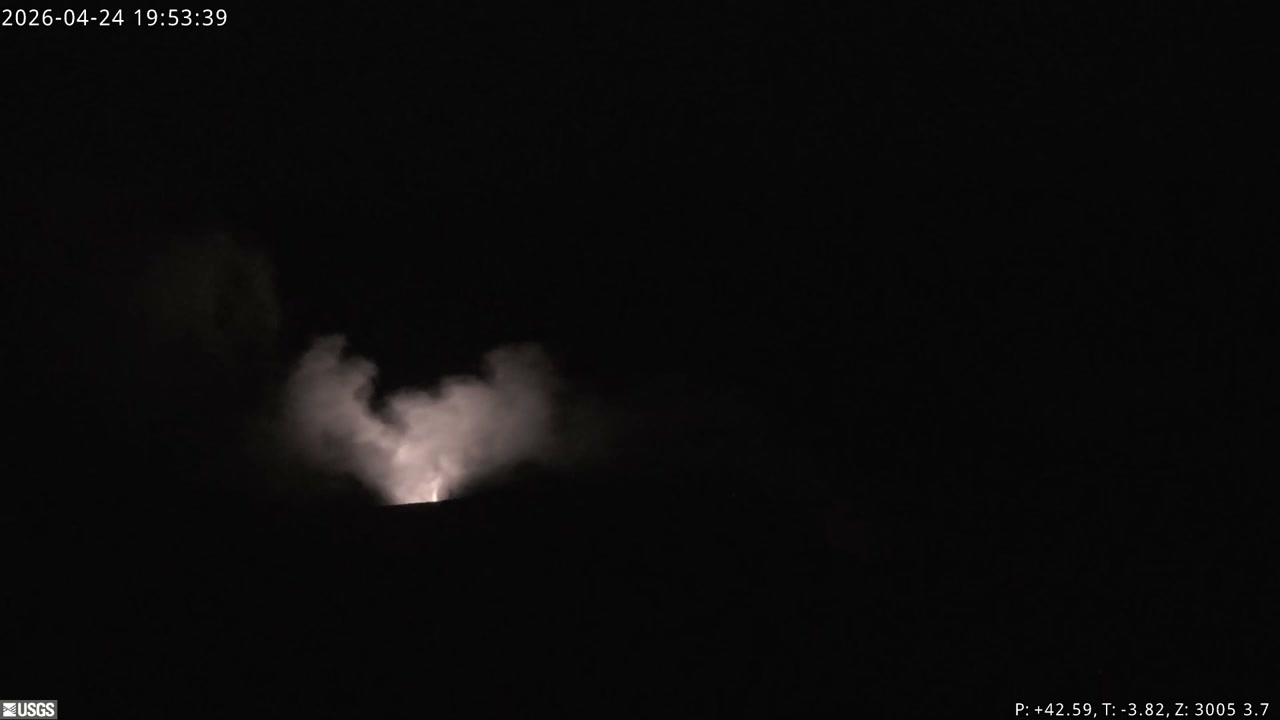
Kīlauea volcano on Hawai’i Island began Episode 46 of the ongoing 2024-2026 summit eruption sequence on Tuesday, May 5, 2026 at 08:17 HST. The event began with vent activity inside Halemaʻumaʻu crater and progressed to sustained lava fountaining within the first hour. As of this writing, three USGS cameras are streaming the action 24/7 and we have all three live on Port of Cams.
If you’re trying to figure out what to watch and when, here’s the playbook.
Where to watch right now
USGS Hawaiian Volcano Observatory operates a rotating set of webcams perched on the rim of the Kīlauea summit caldera. Three of those are live YouTube streams, embedded directly on the Port of Cams Big Island page:
- V1cam — West Halemaʻumaʻu — closest view to the active vent on the west side. This is the angle you want for lava lake close-ups and fountain detail.
- V2cam — East Halemaʻumaʻu — looks across the crater from the east rim. Best for fountain shape, plume direction, and contextual scale of the entire crater floor.
- V3cam — South Halemaʻumaʻu — a pan-tilt-zoom camera from the southern rim. The view changes when USGS adjusts it to follow activity.
All three are 24/7. They will run in the dark — the cams are sensitive enough to capture the lava glow even on moonless nights. If the eruption pauses (Episodes 1-45 have all paused before stopping), the cams keep streaming the empty crater and steam.
What’s actually happening
Episode 46 is part of a longer-term eruptive cycle that’s been pulsing inside Halemaʻumaʻu since late 2024. Each “episode” lasts anywhere from a few hours to a week. Lava fountains have reached 400-600 feet during peak Episode activity in 2025-2026. Episode 45 (April 2026) saw fountains briefly reach over 800 feet. Episode 46 is following a similar opening pattern.
The lava stays inside the crater. Halemaʻumaʻu is enclosed and the lava lake fills and drains within the basin — there is no flow toward populated areas. The risk to the public is air quality (vog, sulfur dioxide downwind) and the standard volcanic hazards inside the closed park area.
For the live data feed (sulfur dioxide emissions, deformation, tilt), USGS posts updates at volcanoes.usgs.gov/volcanoes/kilauea and the daily status report is filed at the HVO daily update.
Best times to watch
Three windows reward the patient viewer:
- Night (10 PM–4 AM HST). Lava glow is most visible. The cams pick up the orange in incredible detail when there’s no daylight washing it out. Time zones: this is 4–10 AM Eastern, ideal morning coffee viewing on the mainland.
- Sunrise (5:30–7:30 AM HST). Steam plumes catch first light and turn pink-orange. The contrast between the cool sky color and warm lava is striking.
- Midday gusty wind (11 AM–3 PM HST). Sulfur dioxide gas usually clears the crater bowl during gusty trade winds, exposing the entire lava lake without the haze that builds up overnight.
The least useful windows are the first hour after sunset (cams adjusting exposure, vog rebuilding) and the noon hour on calm days (gas accumulates, view gets murky).
Multi-cam strategy
Don’t pick one. The three USGS cams give you triangulation that no single angle provides:
- V1cam alone = close-up but flat. You see the lava but can’t tell how big the fountain is.
- V2cam alone = scale but distance. You see the whole crater but lose detail.
- V1 + V2 + K2cam (caldera wide) = dramatic mode. Open three browser tabs, or watch all three on Port of Cams’ Big Island camera page. You’ll have the close-up, the cross-crater view, and the wider Uekahuna bluff context all at once.
For phone viewing, V3cam’s PTZ adjustments are the most “produced” experience — USGS operators move the camera to wherever the action is.
Time-lapse archive
We’re capturing 2-hour time-lapses of all three Kīlauea angles plus K2cam (the wide 4K caldera shot) at HST sunrise, midday, and sunset. The captures get branded and posted on the Port of Cams YouTube channel and X account. So if you miss a window live, the time-lapse usually shows the most photogenic moments compressed into 16 seconds.
What to expect through May
If Episode 46 follows the pattern of recent episodes:
- Day 1–3: Sustained lava fountaining, peak fountain heights, most visually dramatic period.
- Day 3–7: Tapering activity, lava lake fills the crater floor, fountains shrink to dome fountains.
- Day 7+: Pause. The lava lake drains or freezes over. Watch for the “deflation-inflation” tilt cycle that signals the next episode prepping (typically 3-21 days between episodes in the current cycle).
The cams stay live through the pause, so you’ll catch Episode 47 the moment it starts.
Bookmarks worth keeping
- All three Kīlauea cams in one place: Port of Cams Big Island
- USGS canonical short URLs (always redirect to the current live YouTube ID, even when streams rotate):
url.usgs.gov/v1cam→ V1camurl.usgs.gov/v2cam→ V2camurl.usgs.gov/v3cam→ V3cam
- HVO daily update: usgs.gov/observatories/hvo
- Volcano alert level: usgs.gov/volcanoes/kilauea
Episode 46 might still be running when you read this. Open the cams. Lava doesn’t wait.