Live Webcams for Kids — Bears, Penguins, Pandas, Aquariums
Live webcams that engage kids — bears at Brooks Falls, penguins in Antarctica, pandas at zoos, sharks at aquariums. Curated by attention span.
Kids and live cams are a great match. Kids ask “what’s happening right now?” — a question the recorded media of YouTube can’t answer. Live cams can. Pick the right ones and you have hours of enrichment that doesn’t feel like screen time.
This is a curated list of cams that work for different ages.
For toddlers and preschoolers (2-5)
Attention span: 30 seconds to a few minutes. Need bright color, clear motion, simple action.
- Monterey Bay Aquarium — Sea Otters. Otters floating, holding hands (yes, they do this), eating clams. Best cam for this age group.
- San Diego Zoo — Pandas. When pandas are on cam, they’re often eating bamboo or sleeping. Slow but engaging.
- Smithsonian — Naked Mole Rats. Weird animals, surprising kids’ fascination factor.
- Aquarium tank cams (any). Bright fish, slow motion, no scary moments.
Don’t pick: bear cams during salmon runs (kids get distressed when bears catch and eat fish), wildlife waterhole cams in Africa (predator-prey events).
For early elementary (5-8)
Attention span: 5-15 minutes for engaging content. Can handle some narrative complexity.
- Brooks Falls Bear Cam (Katmai, AK). During July salmon runs (peak July 4-mid August), bears catching salmon. Kids learn ecosystem dynamics. Note: yes, bears eat fish — discuss this in advance with sensitive kids.
- Decorah Eagles (Iowa). Bald eagle nest cam. Watch eggs hatch, eaglets grow, parents bringing fish. Famous educational program.
- Penguins (multiple). Antarctic penguin colonies (Bird Island, others). Penguins waddling, swimming, returning to nests with fish.
- Honey Bee Cams (Cornell). Inside-the-hive views. Surprisingly mesmerizing for this age.
These cams pair well with library books on the species. Watch the cam, read about the animal, watch again with new context.
For older elementary and middle school (8-13)
Attention span: 15+ minutes, can handle complexity, science-curious.
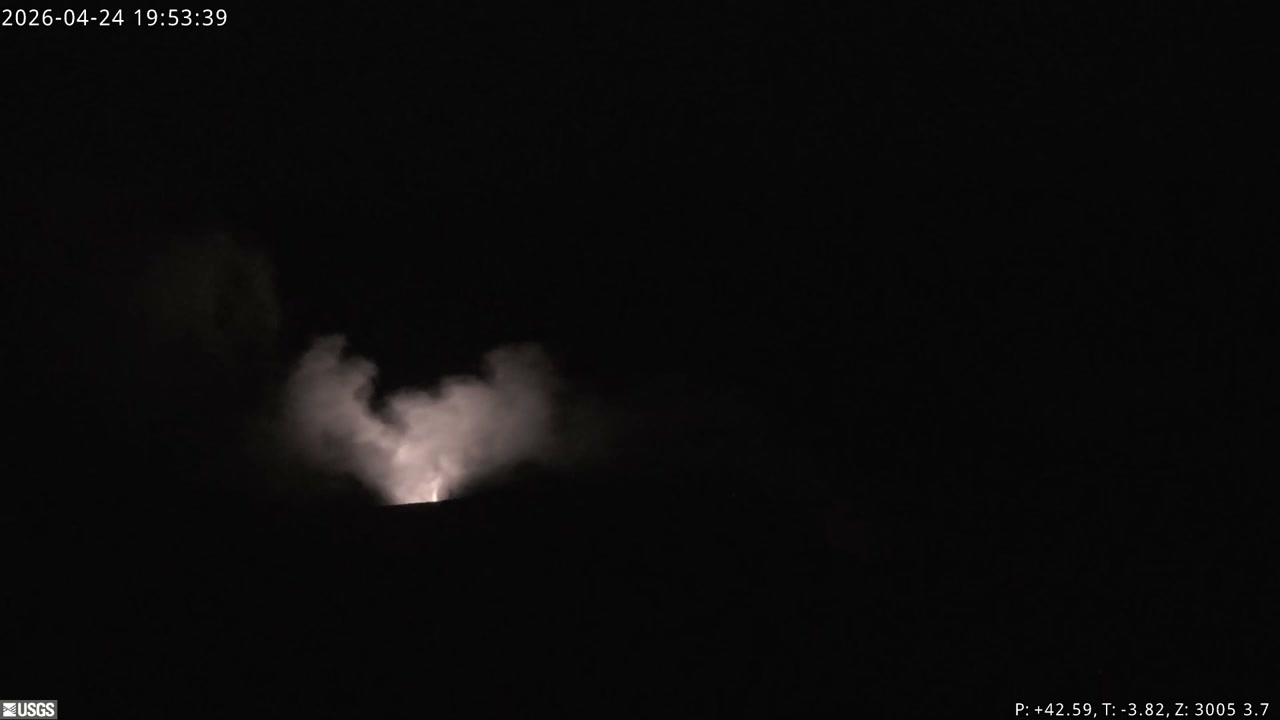
- Volcano cams (Hawaii, Iceland, Italy). Active volcanoes. Real geology happening. Kīlauea Episode 46 is currently erupting — see the live coverage post.
- NASA / ISS cams. Live views from the International Space Station. The “Earth from space” view.
- Aurora cams (Alaska, Northern Sweden, Iceland). Northern lights live during winter dark hours.
- Ocean reef cams. Coral reef diversity, fish behavior.
- Wildlife migration cams. Whale migrations (April-November Pacific), bird migrations (varies by season).
These work well as supplements to school science curriculum.
For ages where they want to “watch a real thing”
Some kids prefer live everyday-life cams over wildlife. For these:
- Cruise port cams. Watching huge cruise ships dock and depart.
- Construction cams. Time-lapse of major construction projects (high-rises going up, bridges being built).
- Airport cams. Planes taking off and landing.
- Train cams. Some railroads have crossing cams; freight trains rolling by.
Educational cam strategies
Cam-of-the-week. Pick one cam, watch for a week, journal what you see. Patterns emerge — animal behavior, weather changes, daily rhythms. Strong learning model.
Cam pairing with travel. Going on a vacation? Watch cams of your destination for a week before. Kids arrive feeling familiar with the place.
Time-zone awareness. International cams require time-zone math. Kids learn geography by figuring out when the cam will be in daylight.
What to avoid
- Predator-prey “everyday” cams in Africa or wilderness areas. Lions hunting on savanna cams, kills are graphic.
- Highway cams during severe weather. Accidents happen on cam.
- Beach cams during shark sightings. Yes, this happens.
- News-event cams (active disasters). Hurricanes, fires — too distressing.
- Live-streaming “reaction” content that’s not actually a fixed cam.
For supervised viewing, use one of the curated cam lists like Explore.org or the Port of Cams cameras page which filter to safe, fixed-cam content.
Discussion prompts (for school or homeschool)
For each cam you watch, try discussion prompts:
- “What time of day is it where this cam is?”
- “What is the animal/scene doing right now? What was it doing 10 minutes ago?”
- “What season is it there?”
- “How is this scene different from what you’d see in our backyard?”
These prompts surface geography, biology, and basic critical observation. The discussion is often as valuable as the watching itself.
Time-lapse instead of live
For some content, recorded time-lapses are more engaging than live for kids:
- A flower blooming over hours compressed to 30 seconds
- A spring snow melt compressed to a minute
- A starling murmuration video
Port of Cams’ YouTube channel posts time-lapses from many of the live cams, edited down to highlights. These often work better for short attention spans than the live feeds.
The combination — live cam for “right now” interest, time-lapse for compressed highlights, occasional documentary follow-up — keeps kids engaged longer than any single approach.

