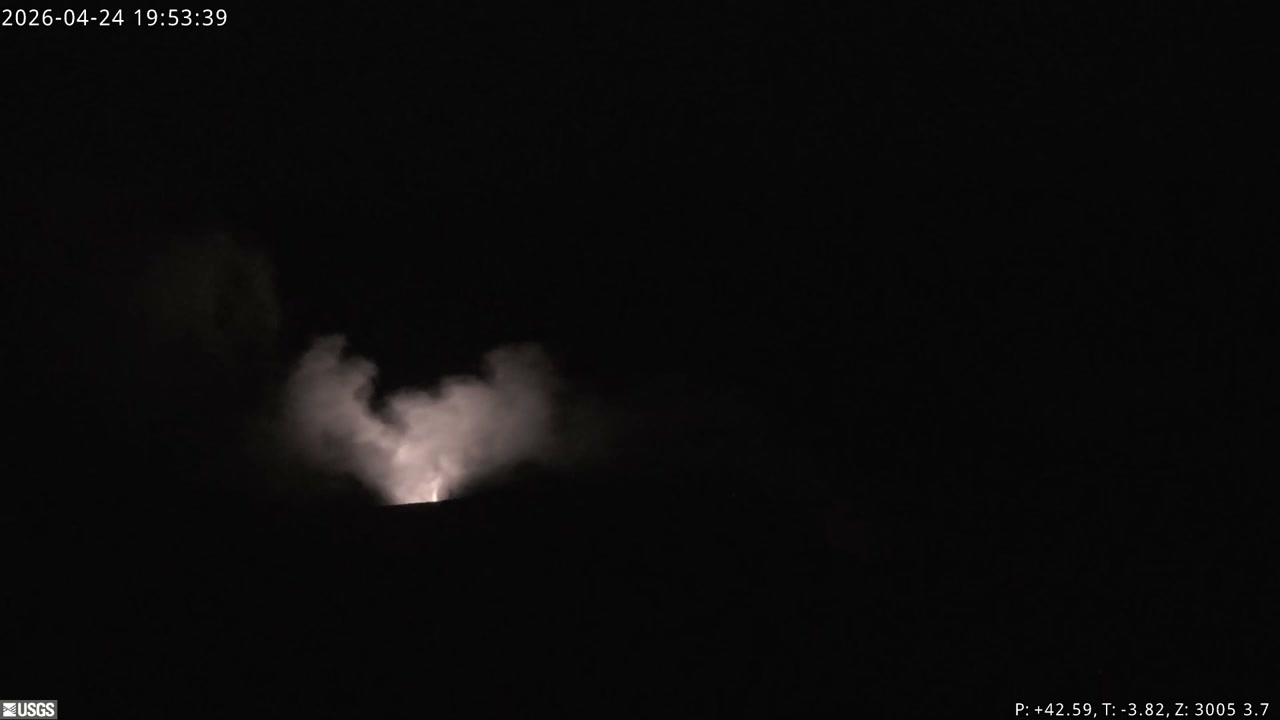
Mauna Loa Live Webcams — Watching Hawaii's Other Active Volcano
Mauna Loa is the world's largest active volcano. Here's where to watch it live — USGS summit cams, NOAA observatory views, and what to look for.
Kīlauea gets the headlines because it erupts more often. But Mauna Loa is bigger — bigger by a lot. By volume, it’s the largest active volcano on the planet. By footprint, it covers half of the Big Island. Its last eruption (November-December 2022) was a 38-day event that produced lava flows visible from space. And there are good live cams pointed at it 24/7, even when it’s quiet.
This is the guide to watching Mauna Loa remotely.
Where Mauna Loa is
Mauna Loa rises from the floor of the Pacific Ocean to its 13,679-foot summit. It’s a shield volcano — broad, gently sloping, classic Hawaiian style. The summit caldera is called Mokuʻāweoweo and is roughly 3 miles long, 1.5 miles wide.
Geographically: Mauna Loa is south of Mauna Kea (the bigger neighbor by elevation, but extinct), east of the saddle road, and its southwest rift zone trends toward the Pacific where lava flows have repeatedly reached the ocean.
The cam stack
MKcam — From Mauna Kea Looking South
This is the most popular Mauna Loa cam. It’s mounted near the Mauna Kea observatories at ~13,800 feet and points roughly south. You see the broad shield of Mauna Loa rising above clouds (when there are clouds — at this altitude you’re often above them).
The view is iconic for two reasons:
- Dual-peak Hawaiian volcano context — you’re looking at Mauna Loa from Mauna Kea. Two of the world’s largest mountains, both Hawaiian shield volcanoes, in one frame.
- Above-the-clouds sunrise/sunset — the cam is at altitude where the cloud deck is usually below you. Sunrise paints the cloud sea pink while Mauna Loa stands clear.
JPG snapshot: volcanoes.usgs.gov/observatories/hvo/cams/MKcam/images/M.jpg
MOcam — Mauna Loa South Caldera
MOcam looks directly into Mokuʻāweoweo from the southern rim of the caldera. When Mauna Loa is quiet (most of the time), it shows the dark lava floor. When magma is moving, this is the first cam to show new vent activity.
JPG snapshot: volcanoes.usgs.gov/observatories/hvo/cams/MOcam/images/M.jpg
NOAA Mauna Loa Observatory cam
Separate from USGS — this is at the Mauna Loa Observatory at 11,135 feet, on the northern flank. NOAA runs it for atmospheric monitoring, but the daily cam stream catches stunning above-the-clouds views.
The observatory itself is famous for the Keeling Curve — the longest continuous record of atmospheric CO₂, started in 1958. So when you watch the cam, you’re looking at one of the most scientifically important sites in the world.
Image: gml.noaa.gov/webdata/mlo/webcam/mkcam.jpg
What you’re actually looking for when watching
Mauna Loa is mostly quiet. So why watch?
-
Pre-eruption warning signs. Magma intrusions, deformation, and small thermal anomalies show up on the cams before USGS issues an alert. If you’ve been watching for a while, you’ll notice subtle changes (steam venting, color shifts on lava surfaces) that signal activity is increasing. The cams aren’t the primary monitoring tool — that’s tilt, GPS, and seismic — but they corroborate what the instruments say.
-
Cloud and weather drama. At 11k-13k feet, the views are above most of the weather, which means you see the cloud deck doing things you’d never see at sea level. Time-lapses of clouds rolling around the summit are stunning.
-
Sunrise / sunset color. Without ground-level haze, the colors at altitude are intense. Mauna Loa cams are go-to for golden-hour viewing.
-
The 2022 eruption was caught live on these cams. The November 27, 2022 onset showed up first as glow on MOcam. If/when Mauna Loa goes again (probabilistically: it’s overdue), it’ll likely be these cams that show it first.
Watch with USGS context
Mauna Loa is at “Volcano Alert Level: NORMAL / AVIATION COLOR CODE: GREEN” most of the time. When status changes, USGS posts notices. Bookmark these:
If you’re new to volcano monitoring, watching a quiet Mauna Loa is great practice. You’ll learn the baseline appearance — exactly what “normal” looks like — so when something changes, you’ll see it.
Trip context: Visiting Mauna Loa
Mauna Loa Observatory is open to the public (limited access, weather-dependent). The summit is reachable via the Mauna Loa Trail from the park, but it’s an extreme hike (multi-day, 7,000+ feet of gain) and requires a backcountry permit.
The easier “visit” is driving the Mauna Loa Road in Hawai’i Volcanoes National Park up to the trailhead viewpoint, about 6,600 feet. From there you can see the volcano’s flank without committing to summit attempts.
For tours and lodging on the Big Island, Viator’s Big Island tour selection lists guided experiences including some that pair volcano summits with stargazing on Mauna Kea.
Cam time-lapses we capture
Port of Cams pulls 2-hour time-lapses from the MKcam every 6 hours, branded and posted to YouTube and X. So if you’re not watching live, the time-lapses give you the highlights of any given day. The MKcam sunrise time-lapse in particular is a recurring viewer favorite — golden light hitting the dual peaks while the cloud deck wakes up below.
Watch the live MKcam now: see the Big Island cameras page on Port of Cams.