Volcanoes Around the World on Live Cam — Iceland, Italy, Japan, Hawaii
Live webcams pointed at active volcanoes around the world. Iceland's Reykjanes, Italy's Stromboli and Etna, Japan's Sakurajima, and Hawaii's Kilauea — all in one guide.
About 50 volcanoes erupt every year around the world. Most happen in places without infrastructure to support live monitoring. But for the ones in well-instrumented regions — Hawaii, Iceland, Italy, Japan, and Indonesia — live cams have become the standard way to watch eruptions safely from anywhere.
Here’s a guide to the world’s best live volcano cams, organized by region.
Hawai’i — USGS Hawaiian Volcano Observatory
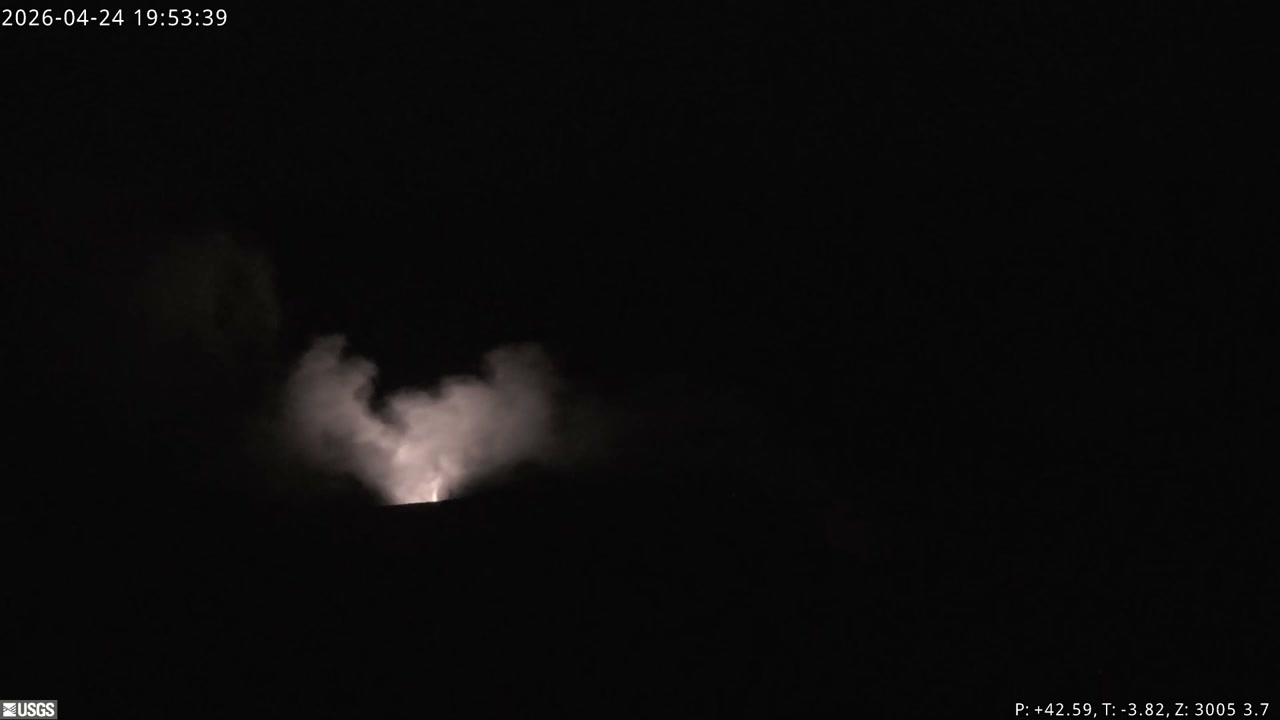
The most active set of summit cams in the world. Three live YouTube streams point at Halemaʻumaʻu crater on Kīlauea, plus several JPG-snapshot cams on Mauna Loa.
- V1cam — West Halemaʻumaʻu
- V2cam — East Halemaʻumaʻu
- V3cam — South Halemaʻumaʻu
- USGS canonical short URLs (always redirect to current live): url.usgs.gov/v1cam /
/v2cam//v3cam
Episode 46 of the ongoing 2024-2026 eruption began May 5, 2026. Read the Episode 46 live coverage post for the full picture.
Iceland — Reykjanes Peninsula
Iceland sits on the Mid-Atlantic Ridge — the boundary where the North American and Eurasian plates pull apart. The Reykjanes Peninsula has been in an active phase since 2021, with new eruption episodes every few months.
- Vísir.is volcano cams — Icelandic news site that runs multiple live cams of every active fissure
- Iceland Monitor (mbl.is) volcano cam — Reykjavík newspaper’s live volcano feed during eruption events
- Icelandic Met Office — official monitoring; cam links during active events
Reykjanes events tend to be short (days to weeks) but visually stunning — fissure eruptions with curtains of fire, lava rivers, and sometimes new road construction to redirect flows.
Best viewing window: when an eruption is ongoing, check daily. When the system is quiet, watch the geothermal areas (Krýsuvík, Geysir) which always have steam activity.
Italy — Stromboli, Etna, Vesuvius
Italy has three classic active volcanoes plus several less-active ones. The two with consistent live cam coverage:
- Stromboli — almost continuously active, small eruptions every 10-20 minutes, “the lighthouse of the Mediterranean.” INGV Stromboli cam page
- Etna — Europe’s largest active volcano, frequent paroxysmal eruptions (intense short events). INGV Etna cams
- Vesuvius — quiet since 1944. Cams exist but show mostly the volcano shape and weather.
INGV (Istituto Nazionale di Geofisica e Vulcanologia) is the Italian equivalent of USGS. Their cams are the canonical source.
Stromboli is especially rewarding for casual watching — small explosions every ~15 minutes mean you don’t have to wait long for action.
Japan — Sakurajima, Aso, Mount Fuji
Japan’s Volcanological Society and the Japan Meteorological Agency operate live cams on the country’s most-watched volcanoes:
- Sakurajima (Kyushu) — one of the world’s most active. Daily small explosions, periodic large ones. Kagoshima City webcam
- Mount Aso (Kyushu) — large caldera with frequent steam venting. Live cam at Aso Volcano Museum
- Mount Fuji — dormant since 1707 but heavily monitored. Multiple cams from different angles, mostly used for weather/climbing context.
Best Japan viewing: Sakurajima during daylight Japan-time (UTC+9). Volcano explosions cause visible ash plumes that are dramatic on camera. Time zone reminder: Japan daytime is mainland US night, so you’ll catch action with morning coffee.
Indonesia — Merapi, Krakatau, Sinabung
Indonesia has more volcanoes than any other country and several are continuously active. Live cam coverage is sparser than Hawaii or Italy but improving.
- BPPTKG Merapi monitoring — Mount Merapi (central Java) live cam, lava dome growth visible on the southwest flank
- CVGHM Indonesia volcanic activity — Indonesia’s volcano monitoring agency, with live cam links during heightened activity
Merapi is famous for pyroclastic flows (“nuées ardentes”); when active, the cams capture incandescent blocks rolling downslope.
Central America — Fuego, Pacaya (Guatemala)
Volcán de Fuego (Guatemala) erupts strombolian style almost daily. Limited live cam coverage but active monitoring through INSIVUMEH (Guatemala’s geological institute). For viewers, recorded clips on YouTube (Volcanic Activity channel) often capture the night-time bombs.
Russia — Kamchatka
Kamchatka has 29 active volcanoes — by far the densest concentration on Earth. Cam coverage is patchy due to remoteness. The KVERT (Kamchatka Volcanic Eruption Response Team) site posts updates when activity changes. For casual watching, search “Kamchatka volcano live” on YouTube; community-run cams sometimes appear during major eruptions.
How to use a global cam stack
For serious volcano watching:
- Pick a “home” cam. Watch one consistently for a few weeks until you know what “normal” looks like there. Most likely choices: Stromboli (consistent activity), Kīlauea (current eruption), Sakurajima (daily explosions).
- Subscribe to alert services. Volcano Discovery emails active-eruption updates. Smithsonian Global Volcanism Program maintains the canonical activity database.
- Time-zone the cams. Coordinate world cams by their local daylight. Hawaii (UTC-10), Iceland (UTC+0), Italy (UTC+1/+2), Japan (UTC+9), Indonesia (UTC+7/+8/+9). One of these is always in good light.
Why we run a cam aggregator
Watching a single volcano cam is easy. Watching ten requires bookmarking, tab management, and tracking which streams have rotated their video IDs. Port of Cams handles the aggregation — pull up the volcano category on the cameras page and the live ones are all there, no broken links to chase.
When new live streams come online (USGS, INGV, others), we add them. When old ones go dark, we drop them. Your job is just to watch.