Watching Kilauea Live in 2026 — What the Eruption Looks Like Right Now
Where to watch Kilauea live in 2026 — USGS cams, summit views, and what the current eruption looks like minute-to-minute. Updated weekly.
A friend in Hilo texted me at 2:34 a.m. last week: “it’s going.” I rolled over, opened the USGS V1 cam on my phone, and watched a fresh fountain push molten rock about thirty meters into the air. The cam frame rate is nothing special. The angle’s been the same for years. None of that mattered. You can sit in any time zone and watch the most active volcano on the planet do its thing — for free — at 2:34 a.m. on a Wednesday.
This is the 2026 walkthrough of where to watch, how to read what you’re seeing, and which “best” cams aren’t actually best.
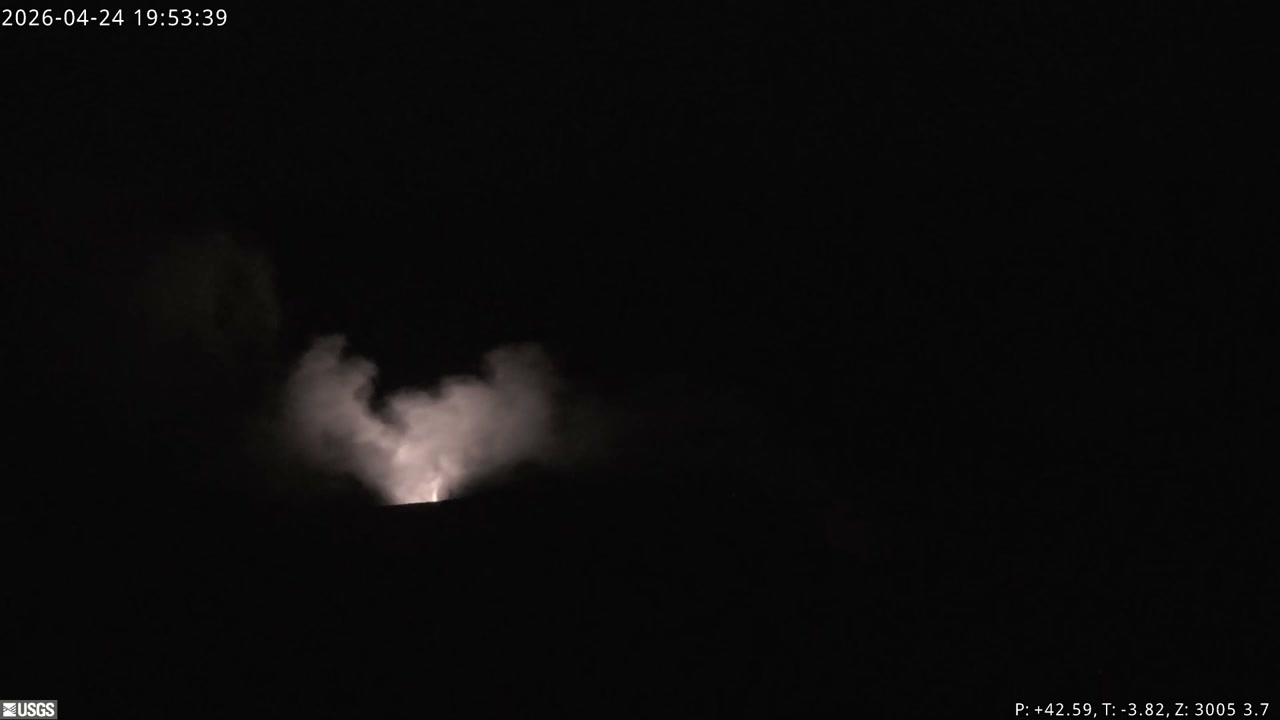 Live frame from our Kīlauea South cam, captured April 24, 2026.
What’s happening at Kilauea right now (April 2026)
Kilauea has been in an episodic eruption pattern within Halema’uma’u crater since late 2024, with periodic pauses and resumes. The current pulse cycle as of this week:
- Eruptive episodes lasting 6 to 30 hours, separated by pauses of 3 to 12 days.
- Lava fountains have ranged from 30 m to over 200 m on bigger episodes.
- The vent activity is concentrated in the southwest part of the crater floor.
USGS Hawaiian Volcano Observatory updates the daily activity status most weekday afternoons. If you’re watching the cam and seeing nothing but steam, check that page — odds are you’ve tuned in during a pause.
The 4 best live cams to watch
Most “Kilauea live cam” lists copy each other. Here’s what’s actually worth your screen time:
1. USGS V1cam (Halema’uma’u summit, west rim)
The classic. Wide angle, looks across the crater floor at the active vent. This is the cam most news outlets pull from.
2. USGS KWcam (Keanakāko’i overlook)
Closer ground angle from the south rim. Less famous but better when the wind direction blocks the V1 angle with steam. This is the contrarian pick most pages skip.
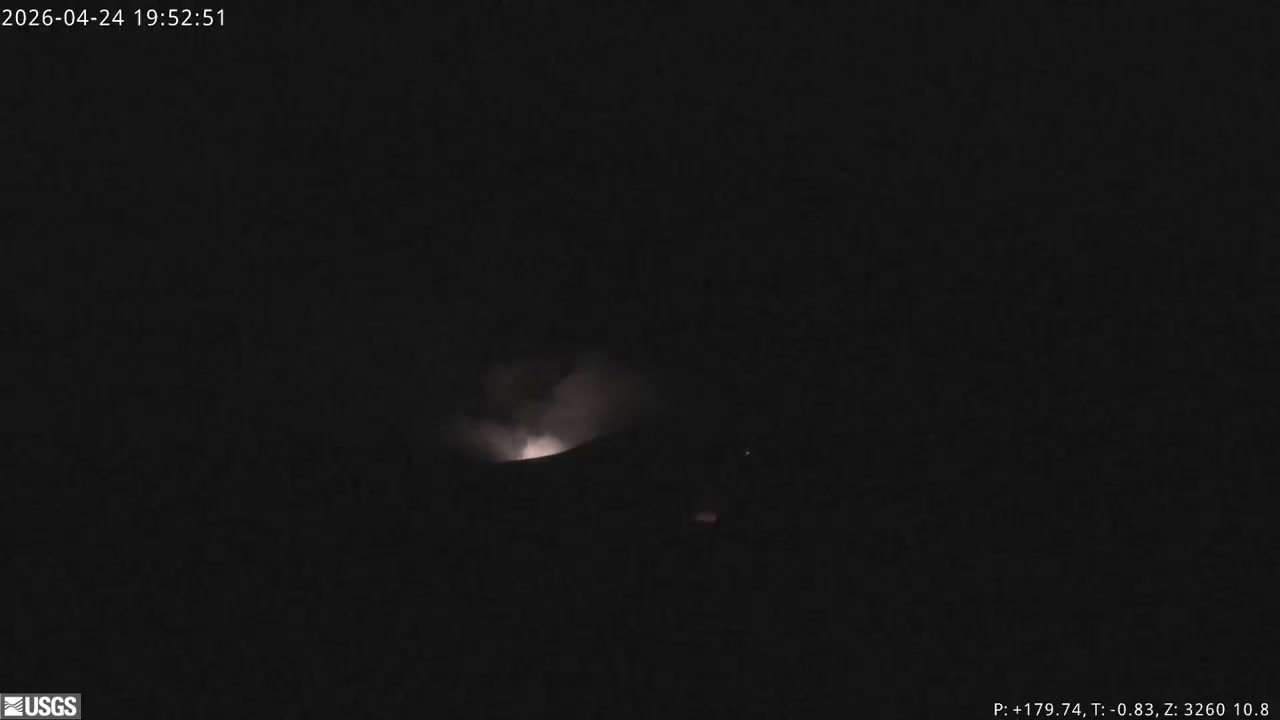 Live frame from our Kīlauea East cam, same morning. Compare to the south angle above — different vent visibility.
3. USGS HMcam (thermal camera)
Same view as V1 but in thermal infrared. Looks weird at first. Once you get used to it, you can see lava that’s hidden by steam in visible light. Excellent during weather hold-ups.
4. Mauna Loa Observatory webcams
For Mauna Loa coverage and a wider summit context. Mostly quiet but worth bookmarking.
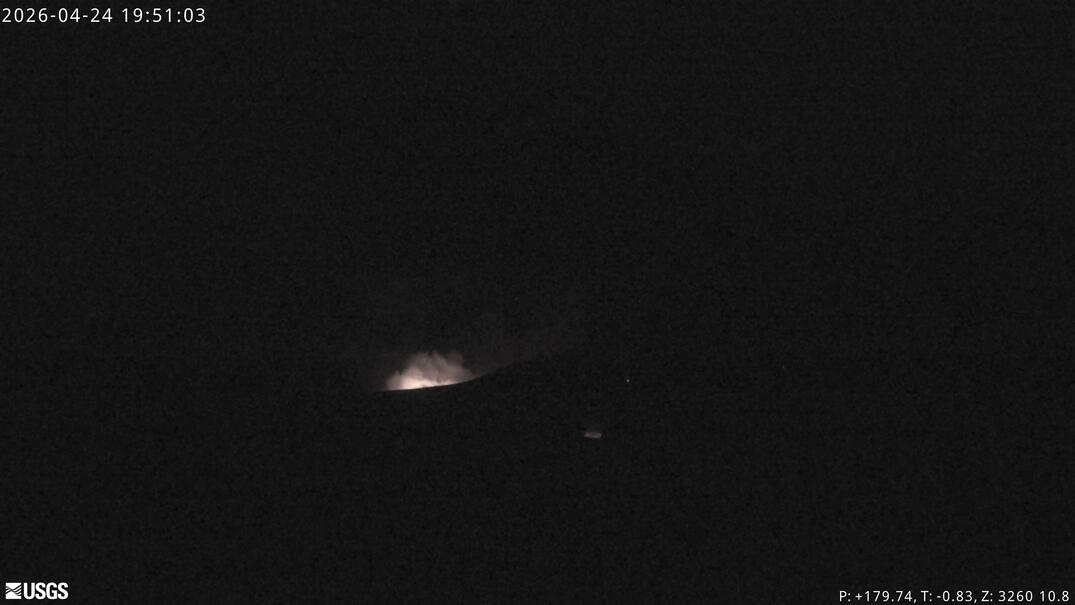 USGS V2cam frame, April 24, 2026 — useful comparison to the visible-light view.
How to read the cam (steam vs. fume vs. lava glow)
This is the part nobody explains:
- White, billowing plume: Steam from groundwater interacting with hot rock. Often most intense after rain. Not lava activity.
- Blue-tinted plume: Sulfur dioxide gas, sometimes called “vog.” Indicates active venting even without surface lava.
- Brownish plume: Ash or wall collapse particles. Less common in current eruption style but historically significant.
- Orange glow at night, no plume movement: Lava lake or stalled flow surface incandescing. Visually quiet but the lava is right there.
- Orange fountains visible during day: Active eruptive episode. This is the headline content.
If you see no plume and no glow, the vent is paused. Tune back in tomorrow.
Best time of day to tune in
- Sunset to about 9 p.m. HST: Glow becomes visible against fading daylight. The most photogenic window.
- Pre-dawn (4–6 a.m. HST): Quietest viewer count, sharpest contrast on cam.
- Midday: Hardest to see lava because the sky overpowers the orange. Steam and structural changes are easier to read though.
If you’re east of Hawaii in the U.S., remember Hawaii is HST = UTC−10, no daylight saving. Sunset in Hawaii in April is around 6:55 p.m. HST = 12:55 a.m. ET.
Mobile vs. desktop viewing tips
USGS cams are still flash-relics in their HTML wrapper. They auto-refresh on a 1- to 5-minute interval depending on the cam. If you bookmark a direct image URL it’ll keep refreshing in your browser tab without ads.
For a multi-cam dashboard, I built one at portofcams.com/cameras/kilauea that pulls the USGS feeds and a few private ones into one grid. Mute on by default. No autoplay video.
If you’re going in person
The viewing area at Kilauea is Hawaii Volcanoes National Park, on the Big Island. Quick reality check:
- Park entry: $30 per vehicle (7-day pass), $15 per person on foot or bike. Annual pass works.
- Best in-person viewpoint: Keanakāko’i overlook, accessible via Crater Rim Trail. Daytime always open. After-dark viewing is allowed at marked overlooks; bring a headlamp.
- Don’t drive Chain of Craters Road expecting lava. That road’s been closed past the 1990s flow front for decades. Current activity is at the summit.
- Vog risk: People with respiratory conditions should check sulfur dioxide levels before going. The park posts daily.
Plan dinner before you go. Volcano Village is small and most restaurants close by 8 p.m. The Hawaii Big Island Itinerary on AlohaCalendar covers the food situation.
Other Hawaii volcano cams (Mauna Loa)
Mauna Loa has its own USGS cam suite. Last erupted in November 2022 (a 12-day eruption from the Northeast Rift Zone). Currently quiet but actively monitored. Worth bookmarking — when Mauna Loa goes, it goes fast.
For the Maui Haleakalā summit (also a volcano, dormant), there are a few weather cams but no active monitoring cams.
Frequently asked questions
Is Kilauea erupting right now? Almost certainly some form of yes — the current episodic pattern means there’s usually either an active episode or a 1–2 week pause. Check usgs.gov/volcanoes/kilauea for today’s status.
When did Kilauea last go quiet? The 2018 lower East Rift Zone eruption ended in September 2018 and was followed by a quiet period until December 2020 when summit activity resumed. The current episodic pattern began in late 2024.
Can I watch lava live? Yes — during active eruptive episodes, the cams catch fountaining and surface flow. During pauses, you’ll see crusted-over lava that may glow faintly.
Are the cams 24/7? The visible-light cams need light, so nighttime images come from the thermal camera or are very dim. They keep running but you might see only sparse glow.
Why is the cam dark sometimes? Either nighttime, weather (heavy fog or rain), or maintenance. Try the thermal cam (HMcam) for night and bad weather.
See related — Watch Kilauea Volcano Live (deeper history), Volcano Webcams Around the World, and the AlohaCalendar Big Island guide for trip planning.