Yosemite Live Webcams: Watch Half Dome, Waterfalls & Weather 24/7
Watch Yosemite National Park live on webcam — Half Dome, Yosemite Falls, El Capitan, and valley views streaming 24/7. Your guide to every Yosemite webcam.
There is something about Yosemite Valley that makes people stop talking. The granite walls are so tall and so sheer that your brain takes a moment to process what it is seeing. Half Dome alone rises nearly 5,000 feet above the valley floor. El Capitan stands as the largest exposed granite monolith on Earth. And Yosemite Falls drops 2,425 feet in three stages, making it the tallest waterfall in North America.
You used to need a park reservation, a five-hour drive from the Bay Area, and a bit of luck with weather to see any of it. Now, a network of live webcams streams Yosemite around the clock — the granite, the waterfalls, the storms, the wildlife, all of it. Whether you are trip planning, chasing light for photography, or just want to watch one of the most beautiful valleys on the planet while you work, this guide covers every Yosemite webcam worth watching.
Why Yosemite Webcams Matter
Yosemite gets roughly 4 million visitors per year, which means roads, parking lots, and trailheads are often packed. Knowing what conditions actually look like before you go can save you a wasted day. Is the valley socked in with fog? Is Yosemite Falls flowing or bone dry? Is smoke from a wildfire obscuring the views? Webcams answer all of that in real time.
Beyond trip planning, though, Yosemite webcams are genuinely worth watching for their own sake. The play of light on granite changes by the minute. Clouds build, break apart, and rebuild against the peaks. Waterfalls swell after a spring storm and shrink within days. It is a slow-motion nature documentary you can check in on anytime.
The Yosemite Webcams
Half Dome
The Half Dome webcam is the flagship Yosemite feed, and for good reason. It captures the park’s most recognizable feature — that iconic curved face of granite that looks like someone sliced a dome clean in half. The camera sits in the valley and provides a direct view of the face, along with the surrounding ridgeline and sky.
Half Dome is one of the most photographed rock formations in the world, and the webcam shows you why. The face catches morning light first, turning from deep shadow to warm orange as the sun rises over the Sierra Nevada. By midday the granite goes flat and pale. Then in the evening, sunset paints the face in shades of pink and gold that photographers call “alpenglow.” This happens nearly every clear evening, and it never gets old.
What to watch for: Morning light hitting the face between 6:30 and 7:30 AM Pacific. Evening alpenglow from about 30 minutes before sunset through 15 minutes after. Storm clouds breaking around the dome create dramatic contrast. In winter, fresh snow on the top and face transforms it completely. On rare occasions, you can spot the cables route on the back side catching light, and during climbing season, headlamps on the face are sometimes visible at dawn.
Best time to watch: Sunrise and sunset year-round. Winter mornings after snowfall. Spring evenings when storm clouds add drama to the alpenglow.
Yosemite Falls
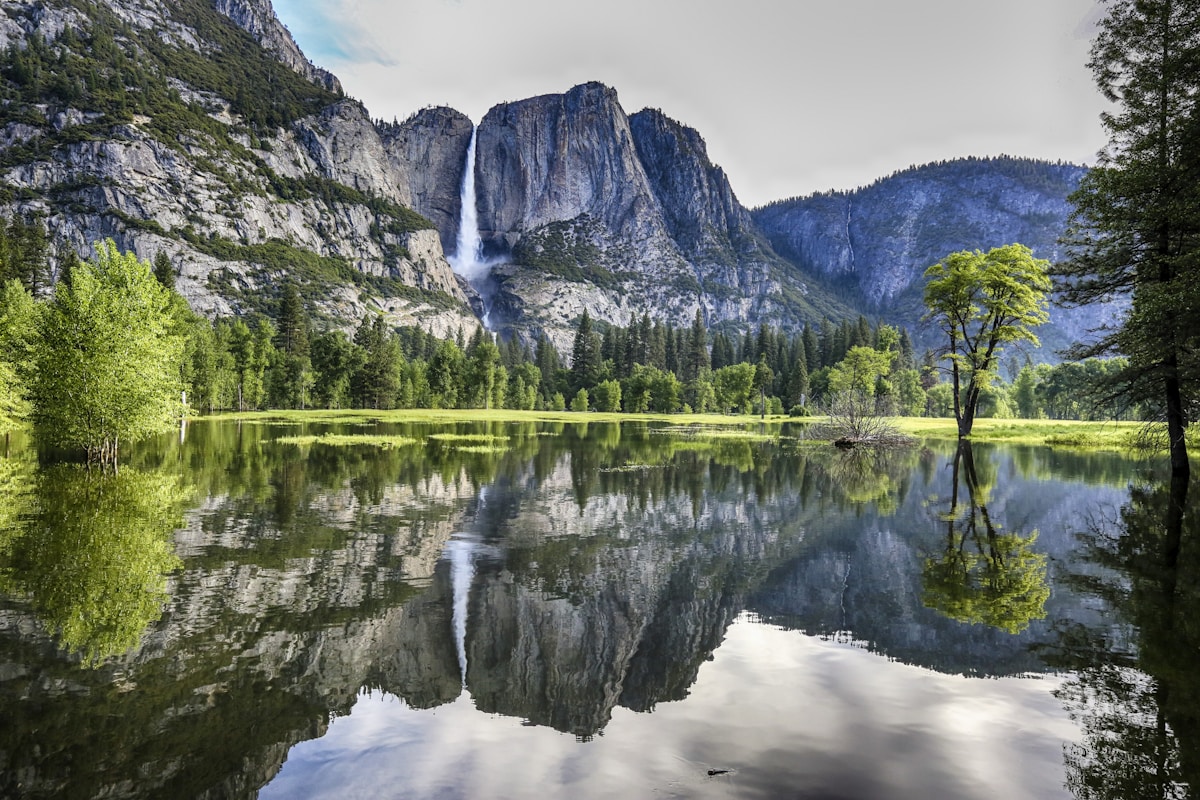
Yosemite Falls is actually three waterfalls stacked on top of each other — Upper Yosemite Fall (1,430 feet), the middle cascades (675 feet), and Lower Yosemite Fall (320 feet). Combined, they make the tallest waterfall in North America at 2,425 feet. The webcam captures the full drop when conditions are right.
Here is what most people do not realize about Yosemite Falls: it is seasonal. The falls are fed entirely by snowmelt, not a year-round river. That means flow peaks in late May through mid-June when Sierra snowpack is melting fast, and the falls often run completely dry by late August or September. Visiting in July expecting a thundering waterfall and finding a dry cliff face is a common disappointment. The webcam saves you from that.
What to watch for: Peak flow in late May and June, when the falls produce so much mist that rainbows form in the spray on sunny afternoons. The upper fall catches wind and sways dramatically on gusty days — the water appears to blow sideways off the cliff. In winter, ice forms on the lower fall and the surrounding cliffs, creating striking blue-white formations. When the falls dry up in late summer, you can see the dark water stains on the granite face, showing the path the water takes when it flows.
Best time to watch: Late May through mid-June for peak flow. Winter for ice formations. Avoid late August through November if you want to see water — there usually is not any.
El Capitan
El Capitan is a vertical granite wall that rises 3,000 feet from the valley floor. It is the largest exposed monolith of granite on Earth and one of the most famous big-wall climbing destinations in the world. The webcam provides a wide view of the face, capturing its sheer scale against the surrounding valley.
The wall is so large that climbers on it are essentially invisible to the naked eye from the valley floor — they appear as tiny specks if visible at all. But the webcam reveals something else about El Capitan that is easy to miss in person: the way light and shadow move across the wall throughout the day. The face is oriented roughly south-southwest, which means it catches direct sunlight from late morning through evening. The texture of the granite — the cracks, the ledges, the discolorations from water seepage — becomes visible as shadows lengthen in the afternoon.
What to watch for: Dawn light hitting the top of the wall while the base remains in shadow. The sharp shadow line moving down the face through the morning. Afternoon sun revealing the full texture and relief of the granite. On clear evenings, the “nose” of El Capitan (the central prow) catches the last light and glows orange while the surrounding valley falls into shadow. During climbing season (spring and fall), you may spot headlamps or the flash of climbing gear if conditions are right, though this requires patience and timing.
Best time to watch: Afternoon through sunset for the best light on the face. Spring and fall for climbing activity. Winter mornings for snow-dusted ledges.
Sentinel Dome and Valley Views
The Sentinel Dome camera offers one of the broadest perspectives available, looking across the valley rather than focusing on a single feature. From this elevated vantage point, you can see multiple Yosemite landmarks at once — the valley floor, the granite walls on both sides, and often the distant High Sierra ridgeline beyond.
This is the webcam to watch if you want to understand Yosemite’s weather patterns. Because the camera looks across the entire valley, you can see fog rolling in, storm cells approaching, and cloud formations interacting with the granite walls in ways that single-feature cameras miss. Valley fog is especially common in fall and winter — it fills the valley floor like a white lake, leaving the granite walls rising above it like islands.
What to watch for: Valley fog events, especially in fall and early winter mornings. Storm fronts moving through the Sierra and hitting the valley walls. Smoke from regional wildfires drifting through the valley — this is important for trip planning in summer. The green-up of the valley floor in spring, visible as meadows shift from brown to vivid green over a few weeks.
Best time to watch: Early mornings for fog and mist. Summer afternoons for thunderstorm development. Fall mornings for the best chance of valley fog inversions.
Seasonal Viewing Guide
Yosemite is a fundamentally different place depending on when you watch. The webcams reveal this in ways that photographs cannot, because you are seeing real conditions rather than a photographer’s best-case shot.
Winter (December - February)
Winter transforms Yosemite Valley into something quieter and more dramatic. Snow covers the valley floor and coats the granite walls. Yosemite Falls slows to a trickle or freezes into blue ice formations. Half Dome goes white on top, with snow clinging to every ledge and crack on the face.
The webcams are particularly good in winter because the low sun angle creates long shadows and warm golden light even at midday. Storm watching is a major draw — Pacific storms slam into the Sierra Nevada from the west, and the webcams show the clouds boiling over the ridgeline and dumping snow into the valley in real time. After a storm clears, the valley is often spectacularly clear with fresh snow on every surface.
Trip planning note: Tioga Pass Road (Highway 120 through the park) closes for winter, usually from November through May or June depending on snowpack. The valley itself remains open year-round via Highway 140 from Mariposa, though chains may be required.
Spring (March - May)
Spring is when Yosemite comes alive. Snowmelt feeds every waterfall in the park, and by May the falls are thundering. The valley floor greens up rapidly — meadows that were brown or snow-covered in March are lush and bright by late April. Dogwood trees bloom white along the Merced River.
This is peak waterfall season and the best time to watch the Yosemite Falls webcam. The volume of water is staggering during big melt events, and the mist from the falls fills the valley with a constant roar that you can almost hear through the camera. Bridalveil Fall, visible from some valley cameras, goes from a gentle stream to a powerful torrent.
Trip planning note: Late May through mid-June is the sweet spot for waterfalls. Earlier in spring, conditions are still wintry with possible road closures. Tioga Pass typically opens in late May or June.
Summer (June - August)
Summer brings clear skies, long days, and the best overall visibility on the webcams. The granite walls are fully lit from sunrise to sunset, and the dry Sierra air means sharp, detailed views on most days.
The tradeoff is wildfire smoke. California fire season typically peaks in July and August, and smoke from fires anywhere in the Sierra Nevada or Central Valley can drift into Yosemite and reduce visibility dramatically. The webcams are invaluable here — checking the feed before driving five hours to the park can save you from arriving to a hazy, washed-out valley where you cannot see El Capitan from the meadow.
Summer afternoons also bring thunderstorms to the Sierra. These build quickly, dropping heavy rain and sometimes hail on the valley, then clearing out by evening. The webcams let you watch the whole cycle: cumulus clouds building over the ridgeline by noon, darkening through the afternoon, rain falling on the valley floor, and clearing skies revealing freshly washed granite at sunset.
Trip planning note: Waterfalls are mostly dry by late July. Tioga Pass is open. Crowds and traffic peak in July. Check webcams for smoke before heading out.
Fall (September - November)
Fall is the underrated season in Yosemite. The crowds thin out dramatically after Labor Day. The light turns golden and warm. Black oaks in the valley floor go yellow and orange, adding color that the park does not have at any other time of year.
The webcams show Yosemite at its most atmospheric in fall. Morning fog fills the valley more frequently as temperatures drop. The low sun angle creates longer shadows and richer contrast on the granite walls. Clear days have a crystalline quality that summer’s haze cannot match.
Trip planning note: Tioga Pass usually closes in November. Valley temperatures are pleasant through October. Waterfalls are dry or nearly so. This is arguably the best time to visit if you want the views without the crowds, and the webcams will confirm that.
Weather Scouting and Trip Planning
The webcams are one of the most practical tools available for planning a Yosemite trip, and most visitors do not know they exist. Here is what to check before you go:
- Valley visibility: Is it clear, foggy, smoky, or storming? The valley cameras tell you instantly.
- Waterfall flow: Are the falls running? How strong is the flow? This changes weekly in spring and can go from roaring to dry in a matter of weeks.
- Snow conditions: Is there snow in the valley? On the roads? How much is on the surrounding peaks? Winter and spring visitors need this information.
- Smoke: During fire season, webcam visibility is the fastest way to assess air quality in the valley without relying on sensor data that may be hours old.
- Tioga Pass: While there is no dedicated Tioga Pass webcam, the high-elevation cameras give you a sense of snow conditions in the high country, which determines when the pass opens each year.
Wildlife on the Webcams
Yosemite Valley is home to mule deer, coyotes, black bears, bobcats, and a wide variety of birds. The meadow and valley-floor cameras occasionally capture wildlife, particularly in the early morning and at dusk when animals are most active.
Mule deer are the most commonly spotted — they graze in the meadows and are large enough to be clearly visible on the webcams. Coyotes cross the valley floor regularly, especially at dawn. Black bears are harder to catch on camera but do wander through the valley, particularly in spring when they emerge from hibernation and in fall when they are feeding heavily before winter.
Do not expect a wildlife show every time you check the webcams, but if you leave a feed running for an hour during dawn or dusk, you have a reasonable chance of spotting something.
Photography Tips from Webcam Watching
If you are planning a photography trip to Yosemite, spending a few days watching the webcams before you go will make you a better shooter when you arrive. Here is what the webcams teach you:
- Light direction: You will learn exactly when and where the sun hits each major formation. Half Dome’s alpenglow timing, El Capitan’s afternoon texture, the way Yosemite Falls catches sidelight — all of this is visible on the webcams and will help you plan where to set up and when.
- Cloud patterns: Sierra weather follows patterns. Afternoon thunderstorms build from the south. Morning fog burns off from east to west. Storm fronts arrive from the northwest. Watching these patterns on the webcams teaches you when to expect dramatic skies.
- Seasonal changes: Seeing how the valley looks across seasons helps you decide when to schedule your trip. The webcams show you exactly what you will get in February versus June versus October.
- Conditions checking: On the morning of a shoot, check the webcams before you leave your campsite or hotel. If the valley is socked in and not clearing, you might pivot to the high country. If it is clear with no clouds, you might wait for afternoon when storms could add drama. The webcams give you the intel to make these calls.
Watch Yosemite Live on Port of Cams
Port of Cams streams over 14,383 live webcam feeds from national parks, beaches, volcanoes, ski resorts, and cities around the world. Our Yosemite feeds are among the most popular, and they are available 24/7 with no account required.
Head to our cameras page to find every Yosemite feed alongside hundreds of other national park webcams — from Yellowstone’s geysers to Kilauea’s lava lake to Glacier’s mountain passes. If you can see it on a webcam somewhere in the world, chances are we are streaming it.