Watch Whale Migration Live 2026 — Maui, Glacier Bay, Monterey
The live whale cams that actually catch sightings — humpback hotspots in Maui and Glacier Bay, plus Monterey Bay cams catching grays this spring.
A breaching humpback popped up on a Maui cam at 8:14 a.m. on a Tuesday in February. I had the cam open in a tab while I was in a different meeting on a different screen and the audio caught the slap before the video did. It’s the kind of thing you can’t plan for. You can plan for the season, the spot, the time of day — but the actual breach is a coin flip. The trick is to bias the coin by knowing where the whales are right now.
This is the 2026 list of live whale cams that catch sightings, and how to schedule yourself to maximize odds.
Why you can’t “plan” a whale cam viewing (sort of)
Whales surface for breath, breach for play or communication, and dive for food. The intervals are unpredictable. A cam pointed at a busy whale corridor will produce sightings most days during peak season — but not on demand.
What you can do:
- Watch during peak migration windows (region-specific).
- Watch during peak feeding hours (early morning, late afternoon).
- Run multiple cams at once.
- Pair video cams with hydrophone (audio) cams.
The hydrophone trick is what most articles miss.
Maui — humpback season Dec–Apr
Hawaii’s humpback population (about two-thirds of the North Pacific population) winters in the warm waters off Maui from roughly December to April. Peak: January–March.
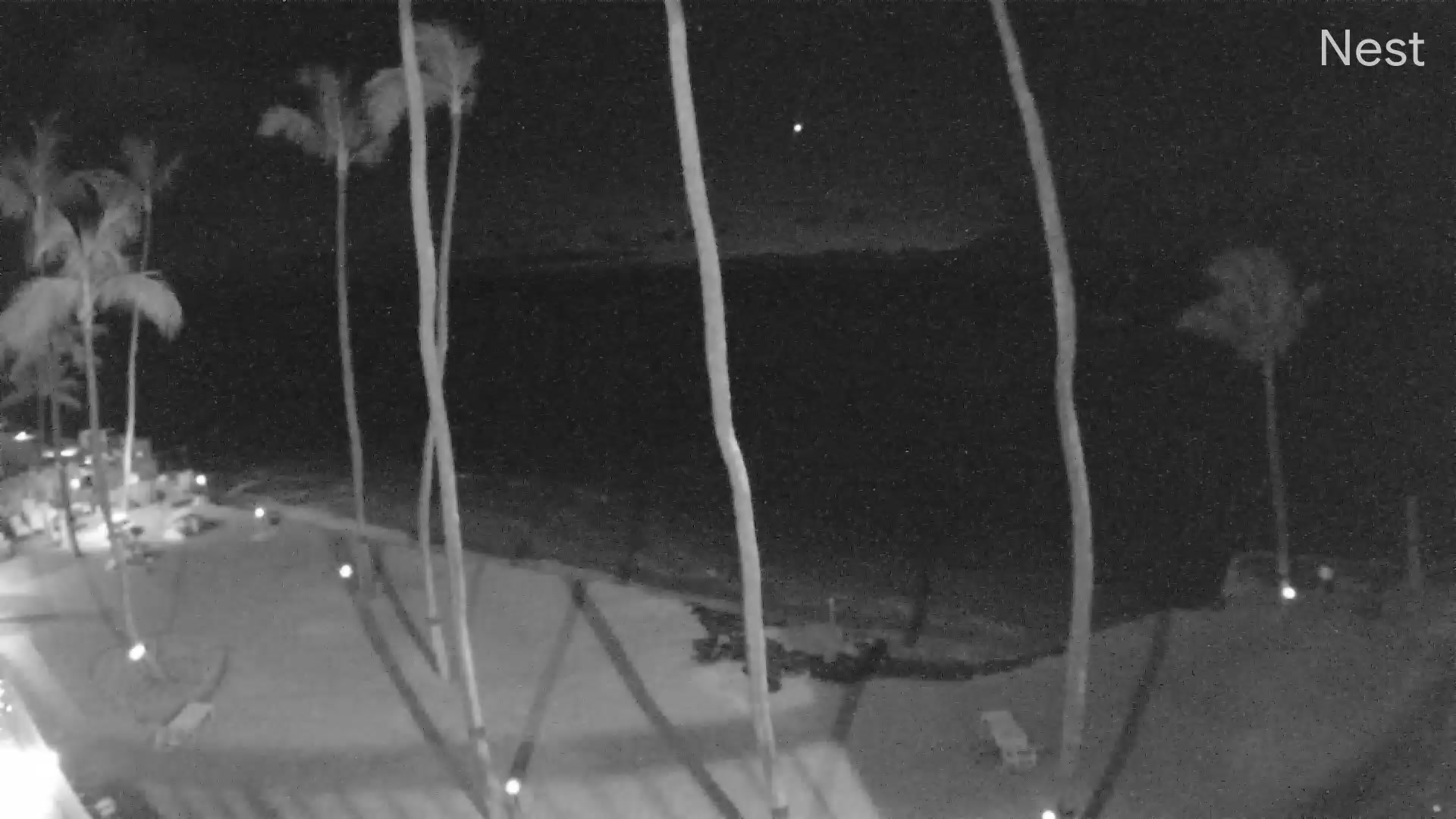 Frame from a south-Maui live cam at 13:54 HST on April 24, 2026 — the same beach where humpback breaches turn up unannounced from December through April.
Best Maui cams
- Pacific Whale Foundation cam — multiple operators have set up cams pointing at the Au’au Channel between Maui and Lana’i. The most reliable for breaches.
- Resort cams — several Maui resorts (Sheraton Maui, Westin Ka’anapali) have cams that catch whale activity in the foreground.
- Maui Ocean Center — has occasional public cam coverage.
Best time of day: 7:00–10:00 a.m. and 3:00–6:00 p.m. HST. Peak in February.
Glacier Bay — feeding season Jun–Sept
Humpbacks return to Alaska in summer to feed. Glacier Bay National Park sees one of the densest summer concentrations. The cams are scientific (NPS partnerships) and intermittent in public availability.
Best Glacier Bay coverage
- NPS Glacier Bay live cam — when running, points at Margerie Glacier or Tarr Inlet. Whale sightings are by-product, but in summer they happen.
- Hubbard Glacier cam — runs during summer cruise season. Whales sometimes pass.
- Frederick Sound cams — privately operated. Bubble-net feeding events in late summer.
Best time of day: any during summer. Long days mean whale activity from 6:00 a.m. to 9:00 p.m.
Monterey Bay — gray whale migration spring/fall
Gray whales migrate from Mexico to the Arctic and back, passing Monterey Bay both directions. Spring migration (mothers + calves) peaks April–May. Fall migration (south to Mexico) peaks December–January.
Best Monterey cams
- Monterey Bay Aquarium webcams — multiple. Open Sea cam catches passing whales occasionally; Bay-pointed cams catch them more often.
- Moss Landing Marine Lab — research-focused but public during certain windows.
Best time of day: morning (calmer water = better surface visibility).
San Juan Islands — orca cams
The Southern Resident orcas (and transient orcas) frequent the San Juan Islands year-round, with peak presence May–September.
Best San Juan cams
- OrcaSound — primarily a hydrophone (audio) network. Catches orca calls live.
- Lime Kiln Point cam — visual cam. Variable reliability.
- Friday Harbor Whale Museum cams — sometimes online.
The hydrophone network here is exceptional. You’ll often hear the orcas before any visual cam catches them.
The audio cams (under-discussed)
This is the contrarian take everyone misses: the audio-only hydrophone cams are more reliable than the video ones. You’ll hear whales before you see them.
- OrcaSound — Pacific Northwest orca audio network.
- Acoustic Recording Units (ARUs) — research arrays around Hawaii and Alaska.
- Cornell Lab of Ornithology — Marine listening posts.
Listen with headphones. The vocalizations are alien. You can identify orcas, humpbacks, and minke calls within a few sessions of practice.
Set a schedule that maximizes sightings
If you want to maximize odds of catching a whale event:
- Know the season for each cam. Maui = winter. Alaska = summer. Monterey grays = April–May (north) and December–January (south).
- Watch during peak hours. Morning and late afternoon. Whales surface more in calm water (mid-day winds increase chop).
- Run 4 cams in a grid. Browser tabs in tile layout — Maui, Glacier Bay (in season), Monterey, San Juans.
- Add a hydrophone tab with audio. Mute the video cams; let the audio fill the room.
- Tune in on a slow workday. Don’t try this during deep work.
Frequently asked questions
Best month for humpbacks? Maui: February. Alaska: July–August. The same whales — different ends of the migration.
Are sightings frequent? Multiple per hour during peak season at high-traffic cams. None for hours during off-season.
Hydrophone cams free? Yes, all major hydrophone networks are public.
Best time of day? Morning and late afternoon. Not midday.
Replays available? OrcaSound saves significant call events. NPS Glacier Bay and PWF cams sometimes have replay archives.
See also: Wildlife Webcams, Best Wildlife Webcams Live, Hidden Gem Webcams. Cross: AlohaCalendar Best Maui Beaches, LFE Glacier Bay Guide.

