
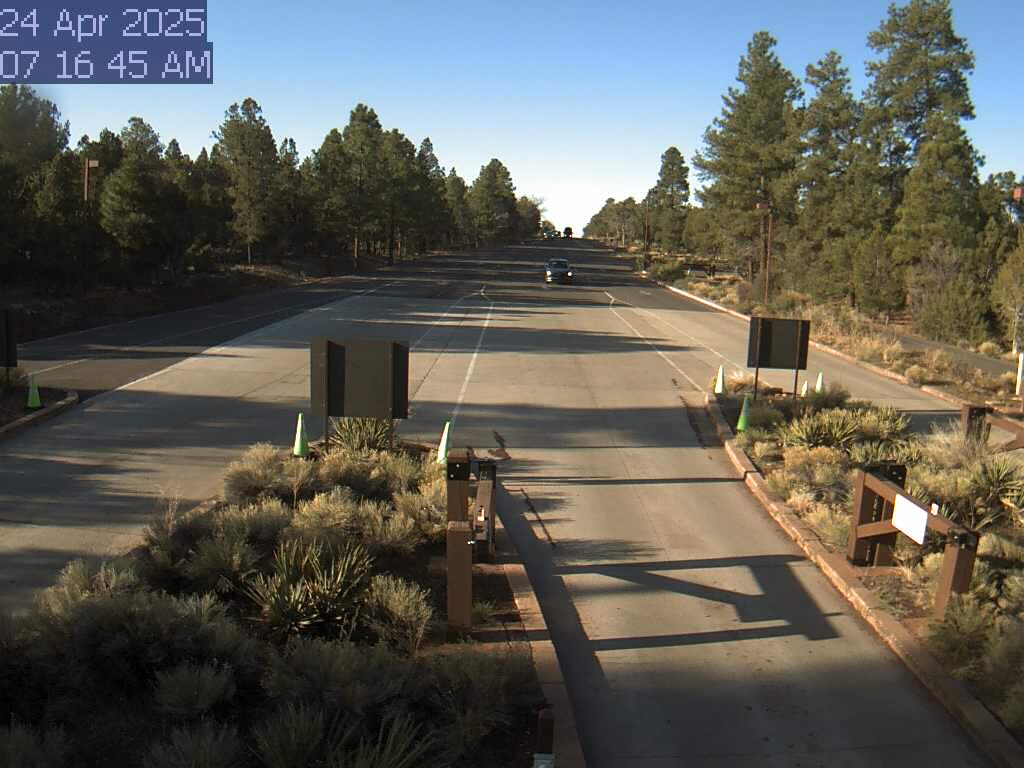
About This Camera
Yavapai Point on the South Rim of the Grand Canyon offers one of the most expansive and geologically rich views in the entire park. This live camera captures the canyon's full vertical scale — from the rim down 5,000 feet to the Colorado River and across to the North Rim ten miles away. The colors of the rock layers shift hour by hour as the sun moves across the sky, revealing nearly two billion years of exposed geologic history.
The Grand Canyon's appearance changes radically with the light. Early morning brings cool, blue-gray tones with long shadows defining every ridge and tributary canyon. Midday flattens the view as the sun climbs overhead. The most spectacular periods are the golden hours — the first 90 minutes after sunrise and the last 90 minutes before sunset — when warm light intensifies the reds, oranges, and rust tones of the Vishnu Schist, Tapeats Sandstone, and Redwall Limestone layers.
Storm watching at the Grand Canyon is extraordinary. Summer monsoon thunderstorms typically build over the rims in mid-to-late afternoon, sometimes producing lightning visible across miles of canyon. Winter brings occasional snow that dusts the rim while the inner canyon often remains warm and clear. The contrast between snow-covered Ponderosa pines and the multi-colored canyon below is one of the most striking sights in the American West.
The Yavapai Geology Museum sits adjacent to the viewpoint and explains the rock layers in detail. Other nearby South Rim attractions include Mather Point, the Rim Trail, Hopi Point, and the historic Bright Angel Lodge. Grand Canyon Village offers shuttle access along the rim and trailheads down into the inner canyon.
Fetching local weather…
Recommended Gear
As an Amazon Associate, we earn from qualifying purchases.
Things to Do Nearby
Advertisement