Iceland Live Webcams — Reykjavik, Kirkjufell, the Volcano & More
Iceland has some of the most dramatic live webcams on Earth — an erupting peninsula, the world's most-photographed mountain, and a capital lit by aurora. Here's every cam worth bookmarking.
Iceland punches well above its weight in the live webcam world. The country has active volcanoes erupting in real time, the most dramatic aurora in the Northern Hemisphere, a skyline defined by a single spectacular church, and a peninsula full of mountains that look like concept art. The webcams here are genuinely worth watching any time of year — the scenery changes whether it’s midnight sun, polar night, or eruption season.
The Active Volcano Cam — Sundhnúkur Fissure System
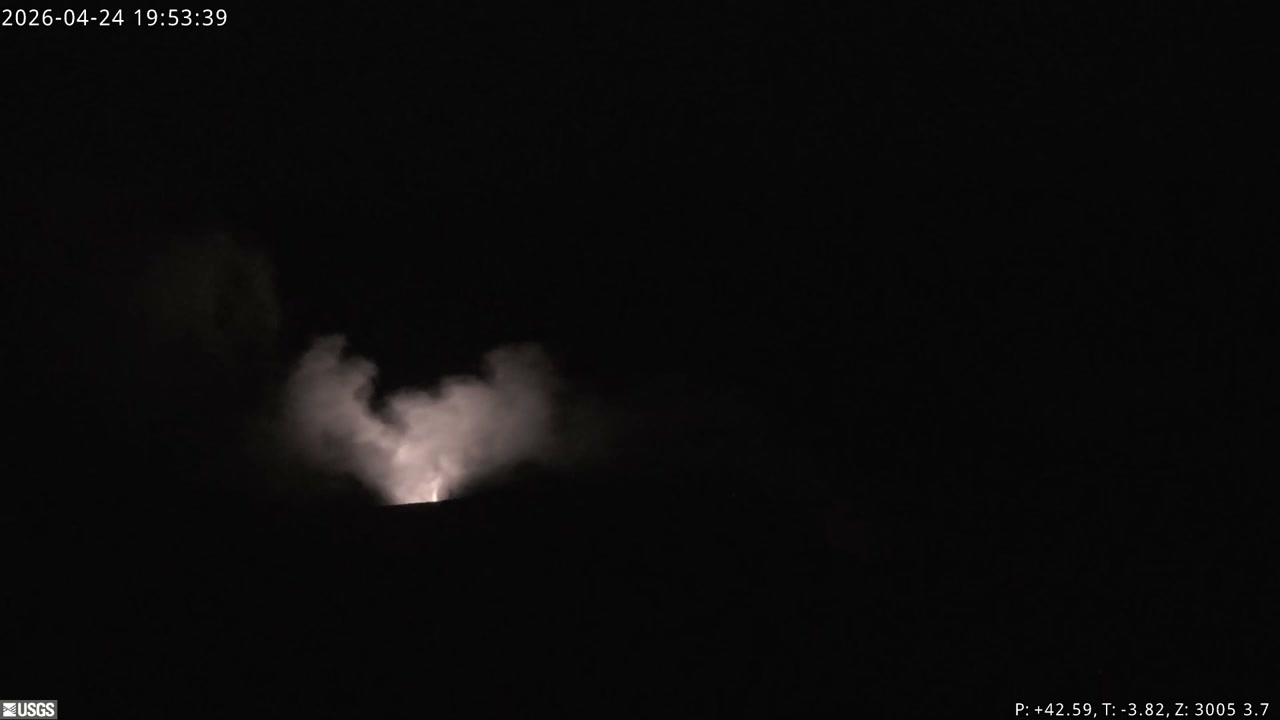
The Reykjanes Peninsula south of Reykjavik has been erupting repeatedly since 2021. The Sundhnúkur fissure system has opened multiple times, sending lava rivers across the peninsula and toward the town of Grindavík. When active, the eruption is visible from Reykjavik and from the webcam pointed at the fissure area.
What makes this cam compelling is the unpredictability. The volcano can go weeks without visible activity, then suddenly open a new fissure and produce rivers of lava visible in real time. The glow shows up clearly at night — even on the Reykjavik skyline cams — and lava fountains can reach hundreds of feet during intense episodes.
Best time to check: Night, when lava incandescence cuts through the darkness. During active phases, steam and orange glow are visible even in daylight. Eruptions tend to start suddenly and can last days to weeks.
Kirkjufell — Iceland’s Most Famous Mountain
The webcam at Grundarfjörður on the Snæfellsnes Peninsula frames Kirkjufell, the most-photographed mountain in Iceland. The 1,519-foot peak rises straight from the sea in a shape that looks almost too dramatic to be natural — like someone designed it specifically to be photographed.
Game of Thrones fans will recognize it as “Arrowhead Mountain” from the Beyond the Wall sequences. In reality, Kirkjufell looks even better in person (or on camera) than it does on screen. The mountain’s profile is reflected in Kirkjufellsfoss waterfall at its base, and on clear nights the aurora wraps around the peak.
Best time to check: October through March for northern lights reflecting in the fjord. July for midnight sun turning the peak golden at 11pm. Any time for the view — it’s never bad.
Reykjavik — Two Angles of the World’s Northernmost Capital
Two webcams cover Reykjavik from different angles. One looks across the harbour at Miðbakki pier, where fishing boats and cruise ships share the dock year-round. The other shows the city skyline dominated by the distinctive concrete spire of Hallgrímskirkja — at 244 feet, the tallest structure in Iceland.
Reykjavik sits at 64°N. That means nearly perpetual darkness in December and January (when northern lights are most active) and near-perpetual daylight in June and July. The midnight sun period is surreal on camera — the sky stays lit well past midnight, casting long golden shadows across the colourful rooftops.
Best time to check: Winter evenings for northern lights (October–March, strongest at solar maximum, which peaks in 2025–2026). Midsummer for midnight sun magic.
Skinnastaður — Remote Northeast Iceland
One cam covers Iceland’s remote northeast, near the highland farming region of Þingeyjarsveit. It’s a quieter view — rolling farmland, distant volcanic plateaus, and the dramatic light that Iceland’s high latitude produces at low sun angles. In summer, the Arctic tern nesting season turns the area into a wildlife spectacle (they dive-bomb anyone who gets too close to a nest, including researchers).
This cam is good for understanding what most of Iceland actually looks like outside the tourist circuit: remote, volcanic, spacious, and starkly beautiful.
Westfjords — Iceland’s Most Isolated Region
The cam near Ísafjarðardjúp captures Iceland’s Westfjords, a deeply indented peninsula of sheer cliffs, small fishing villages, and fjords that see some of the most dramatic light in the country. The Westfjords receive the smallest number of tourists of any region in Iceland — roads are winding, infrastructure is minimal, and the scenery rewards those who make the effort.
Worth watching for: Fog rolling in from the Atlantic, bird cliffs with nesting seabirds in summer, and winter scenes where the fjord can freeze partially at its edges.
When to Watch Iceland Cams
| Season | What to see |
|---|---|
| October–March | Northern lights (active 9–11pm local time; stronger at high Kp index) |
| November–January | Polar twilight — long blue-hour light all day |
| Late May–July | Midnight sun — bright at midnight, long golden hours |
| June–August | Puffins on coastal cliffs, Arctic terns nesting |
| Year-round | Eruption potential from Reykjanes Peninsula |
About Iceland’s Northern Lights
The aurora borealis is visible in Iceland from late August through April, with peak activity in December and January. The key variable is cloud cover — Iceland’s weather changes fast, and clear windows can appear and disappear within hours. The strength of the aurora is measured by the Kp index (0–9); anything above Kp 3 is worth watching, and above Kp 5 the lights are visible even through thin clouds.
The Veður app (Icelandic Met Office) gives 3-day cloud cover forecasts alongside aurora forecasts — serious aurora chasers use both.
See All Iceland Webcams
Port of Cams carries all active Iceland webcams — Reykjavik harbour, Kirkjufell, the Westfjords, northeast Iceland, and the volcano cam when the Sundhnúkur system is active.