Katmai Bear Cam Guide: Watch Brown Bears Catch Salmon Live at Brooks Falls
Watch Katmai's famous brown bears catch salmon at Brooks Falls live on webcam. Your complete guide to the bear cams — when to watch, what to look for, and bear profiles.
There is a webcam in a remote corner of Alaska that, every July, becomes one of the most-watched live streams on the entire internet. It points at a waterfall. That is it — a six-foot cascade of whitewater in the middle of the wilderness. But stand a dozen 800-to-1,200-pound brown bears in that waterfall, fill the river with leaping sockeye salmon, and you have something no scripted nature documentary can touch. Raw, unedited, and completely unpredictable.
The Brooks Falls Bear Cam at Katmai National Park has turned millions of casual viewers into obsessive bear-watchers. People set alarms to catch the morning fishing shift. Offices gather around a monitor during lunch. Teachers project the stream for entire classrooms. And every October, the internet collectively loses its mind voting on the fattest bear.
This is your complete guide to getting the most out of the Katmai bear cams — every camera angle, the best times to watch, the bears you will learn by name, and the wild behaviors you will see if you are patient enough to wait.
The Cameras: Your Window into Bear Country
Katmai’s bear cams are operated by explore.org in partnership with the National Park Service. Multiple cameras cover different stretches of the Brooks River, and each one tells a different part of the story.
Brooks Falls Cam — The Main Event
The Brooks Falls Bear Cam is the one you have seen in every viral clip. The camera sits above the lip of Brooks Falls, a six-foot waterfall on the Brooks River where sockeye salmon must leap upstream to continue their spawning migration. The bears know this. They have known it for thousands of years.
During peak season, bears line up across the top of the falls like diners at a sushi bar. Some stand in chest-deep water with their mouths wide open, waiting for a salmon to jump directly in. Others perch on rocks at the lip of the falls and lunge at fish as they leap. The best fishers barely move — they just wait, and the river delivers.
This is the camera that produces the jaw-dropping catches, the dramatic standoffs between dominant males, and the comedic moments of a bear completely whiffing on an easy fish.
Lower River Cam
Downstream from the falls, the Lower River cam captures a wider, calmer stretch of the Brooks River. This is where you will see more social dynamics — bears interacting, mothers nursing cubs on the bank, subadult bears play-wrestling, and the occasional bear that simply lies down in the river and takes a nap.
The Lower River tends to have more consistent activity throughout the day, even when the falls are quiet. Bears that are not dominant enough to claim a spot at the falls often fish here instead, using different techniques suited to the slower water.
Riffles Cam
The Riffles camera covers a shallow, fast-moving section of the river. This is a favorite spot during the second salmon run in September, when the fish are more spread out and the water level drops. You will see bears using the “snorkeling” technique here — submerging their entire head underwater and chasing salmon along the riverbed.
The Riffles is also a great camera for watching bear hierarchy play out. When a dominant bear arrives, subordinate bears quietly move aside, sometimes abandoning a prime fishing spot without a single growl exchanged. The social rules are complex and fascinating.
Dumpling Mountain Cam
For a completely different perspective, the Dumpling Mountain cam provides a sweeping landscape view of Naknek Lake and the surrounding terrain. This is less about individual bears and more about the sheer scale of Katmai — volcanic peaks, boreal forest, and water stretching to the horizon. It is a gorgeous camera for weather watching and sunset viewing, even during the off-season.
The Salmon Run: Why the Bears Are Here
Everything revolves around sockeye salmon. Understanding the salmon cycle is the key to knowing when the bear cams will be worth watching.
The First Run — Late June Through July
Sockeye salmon begin entering the Brooks River from Naknek Lake in late June, pushing upstream toward their spawning grounds at Lake Brooks. They must pass over Brooks Falls to get there, which is exactly why the bears show up.
July is the single best month to watch. The salmon run peaks, the bears are hungry after emerging from hibernation, and competition for the best fishing spots at the falls is fierce. On a good day in mid-July, you might count 15 to 20 bears visible on the Brooks Falls cam simultaneously. The action can be nonstop for hours.
The Lull — August
By August, the first pulse of salmon has passed through and the fishing at the falls slows down. Many bears disperse to other streams or move to different parts of the river. The cams are quieter during this month, though you will still catch activity — particularly mothers with cubs, who tend to avoid the crowded falls and fish in less competitive areas.
The Second Run — September
September brings a second wave of action, and it is a different kind of spectacular. The salmon that spawned earlier are now dying (salmon die after spawning — it is one of nature’s most dramatic life cycles), and their carcasses fill the river. Bears feast on the easy calories.
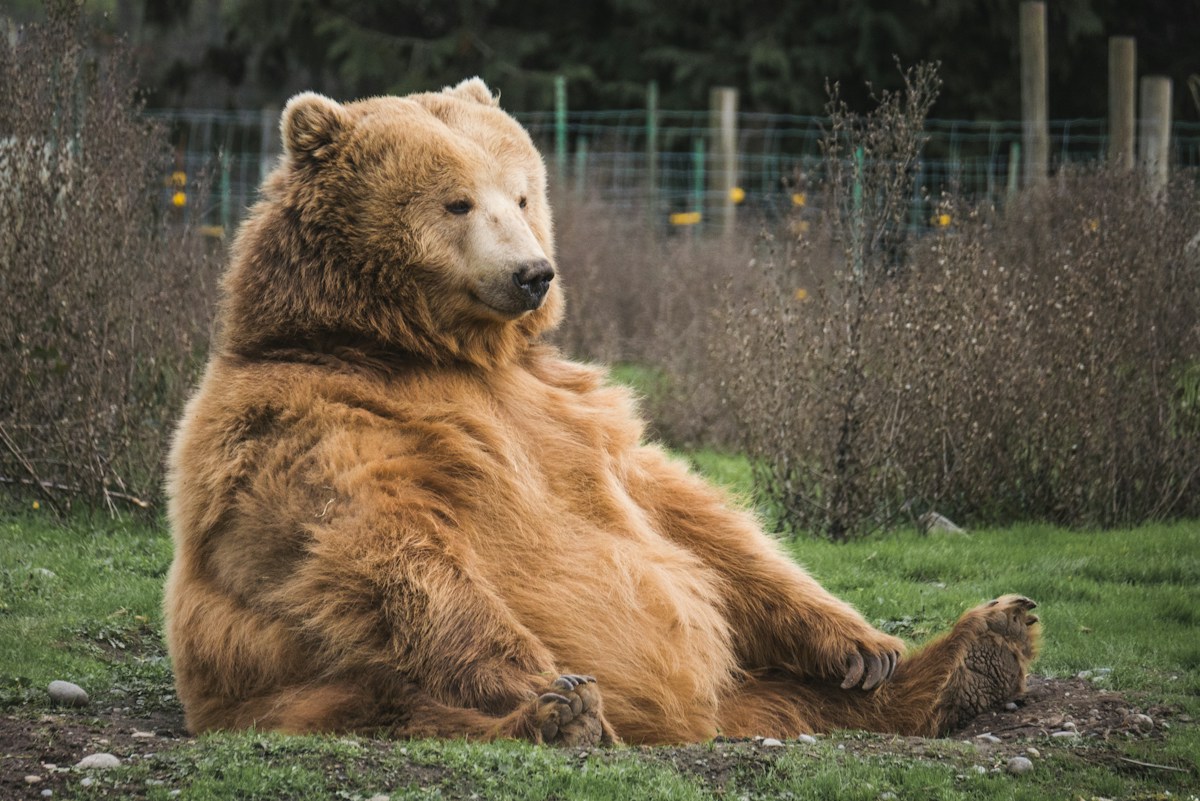
This is also hyperphagia — the period when bears are in an eating frenzy, consuming up to 80 to 90 pounds of food per day to pack on fat before hibernation. Bears that looked lean in July are now enormous. Their bellies sway when they walk. Their faces are round. They are, in the most literal sense, getting fat.
Off-Season — October Through May
The bears enter their dens by late October, and the cams show an empty river through winter and spring. The streams still run, and you will occasionally see other wildlife — eagles, foxes, wolves — but the main show is over until June.
Famous Bears: The Ones You Will Learn by Name
One of the things that makes Katmai’s bear cams so addictive is that you start recognizing individual bears. Rangers and dedicated viewers track them year after year, and some have become genuine celebrities.
Bear 480 “Otis”
Otis is the elder statesman of Brooks Falls. A four-time Fat Bear Week champion, he is known for his patience and technique rather than brute dominance. Otis often fishes at the “jacuzzi” — a turbulent pool just below the falls — sitting motionless with his mouth open until a salmon swims in. He is older, sometimes arriving at the falls later in the season than other bears, but when he shows up, the comment sections light up. Viewers love Otis the way sports fans love a veteran quarterback.
Bear 747
Named after the aircraft for obvious reasons, 747 is one of the largest bears at Brooks Falls — regularly exceeding 1,400 pounds by September. He is a dominant male who claims prime fishing spots through sheer size. Watching 747 walk down the river is like watching a small car navigate a stream. He is a perennial Fat Bear Week contender and the bear most likely to make your jaw drop just by standing up.
Bear 128 “Grazer”
Grazer is one of the most recognizable females at Brooks Falls, known for being fiercely protective of her cubs and an aggressive fisher. She is not intimidated by larger males and will hold her ground at the falls when other bears might defer. Grazer’s parenting style is intense — she keeps her cubs close, teaches them to fish early, and does not tolerate other bears getting near them.
Bear 435 “Holly”
Holly is a veteran female who has been documented at Brooks River for years. She is a skilled and efficient fisher, and viewers have watched her raise multiple litters of cubs on camera. Holly tends to be calmer and more strategic than Grazer, picking her spots carefully and avoiding unnecessary confrontations.
Bear 32 “Chunk”
Chunk lives up to the name. A large male with a blocky build and a talent for catching salmon, Chunk is a regular presence at the falls and a consistent Fat Bear Week contender. He is one of those bears that seems to gain weight visibly from week to week during hyperphagia.
Fishing Techniques: What to Watch For
Not all bears fish the same way, and once you start noticing the different techniques, you cannot unsee them. Here are the main styles:
The Stand-and-Wait (Mouth Open). The classic. A bear stands at the top of the falls with its jaws wide open, waiting for a salmon to leap right in. The best fishers using this technique barely move for minutes at a time. When it works, it looks effortless. When it doesn’t, you get a bear standing there looking slightly foolish while salmon leap around its head.
The Lunge. Some bears prefer an active approach — they spot a salmon in the water and lunge face-first after it. This works better in shallower water and requires speed and timing. Cubs and younger bears tend to use this technique (with mixed results).
Snorkeling. The bear submerges its entire head — sometimes its whole upper body — and chases salmon underwater. This is most common at the Riffles, where the water is shallow enough to wade but deep enough that fish can hide. It looks absurd. A 1,000-pound bear with its rear end in the air and its head underwater is objectively funny.
The Sit-and-Wait. Some bears simply sit in the river like they are in a bathtub and wait for salmon to bump into them. It sounds lazy. It is lazy. It also works surprisingly well during heavy runs when the fish are everywhere.
Piracy (Stealing). Not every bear fishes for itself. Some bears — typically dominant males — wait for a smaller bear to catch a fish and then take it. The smaller bear usually surrenders the catch without a fight. It is not honorable, but it is efficient, and it happens constantly.
The Dive. Occasionally, a bear will fully dive into a deep pool after salmon. The entire bear disappears underwater for several seconds. When it surfaces — sometimes with a fish, sometimes without — the splash is enormous.
Watch the cubs. They try every technique, usually badly, and the learning process is one of the most entertaining things on the cams. A cub lunging repeatedly at a fish and missing every time, then looking back at its mother as if expecting help, is peak wildlife content.
Fat Bear Week: The Internet’s Favorite Competition
Every October, Katmai National Park runs Fat Bear Week — a bracket-style, single-elimination tournament where the public votes on which bear gained the most weight over the summer. It started as a small social media campaign in 2014 and has exploded into a genuine cultural event. Millions of people vote. News outlets cover it. There is merch.
The format is simple: rangers post before-and-after photos of bears from early summer (lean, freshly out of hibernation) and late September (absolutely enormous after months of hyperphagia). Viewers vote on head-to-head matchups, and the fattest bear is crowned champion.
Fat Bear Week typically runs in the first or second week of October, and the bear cams see a massive spike in viewership during the event. Past champions include Otis (four-time winner), 747 (a fan favorite for sheer mass), and Bear 128 Grazer (proving it is not just about size).
It is silly. It is also weirdly emotional. People get genuinely invested in these bears, and when a beloved bear does not show up one season — or looks thin, or has an injury — the concern is real.
Best Times to Watch
If you want to maximize your chances of catching action on the cams, here is the cheat sheet:
- Best month overall: July. No question. Peak salmon run, maximum bears, dramatic catches at the falls.
- Best for sheer bear size: Late September. Hyperphagia means the bears are at their fattest and heaviest.
- Best time of day: Early morning and evening (Alaska time — AKDT, UTC-8). Bears tend to be most active at dawn and dusk, though during peak salmon runs, activity can be continuous throughout the day.
- Worst time to watch: August (the lull between runs) and October through May (hibernation).
- Sleeper pick: Late June, when the first bears begin arriving and the salmon run is just starting. Fewer viewers, and you get to watch the bears figure out their fishing spots for the season.
Keep in mind that Katmai is in Alaska, so summer days are extremely long — 18-plus hours of daylight in June and July. The cams have usable light for most of the day.
The Science and Conservation Behind the Cams
The Katmai bear cams are not just entertainment — they are one of the most successful conservation tools ever deployed. By making brown bears visible and relatable to millions of people worldwide, the cams have built an enormous public constituency for protecting Katmai and its bears.
Katmai National Park was originally established in 1918 to protect the volcanic landscape after the eruption of Novarupta in 1912. Today, it is home to approximately 2,200 brown bears — one of the densest populations on Earth. The Brooks River corridor is the star of the park, but the bears range across four million acres of protected wilderness.
The webcams also serve a scientific purpose. Rangers use them to monitor individual bears, track population trends, document maternal behavior, and study how bears respond to changes in salmon runs. Citizen scientists watching the cams contribute sightings and behavioral observations through the explore.org community.
The salmon runs that sustain the bears are themselves a barometer of ecosystem health. Sockeye salmon populations in Bristol Bay (the watershed that includes Katmai) are among the largest and most productive in the world, but they face threats from climate change, proposed mining projects (most notably the controversial Pebble Mine), and shifting ocean conditions. Watching the bears catch salmon is a reminder that this entire ecosystem is connected — and worth protecting.
How to Actually Visit Katmai
Watching on a webcam is incredible, but if the cams make you want to visit in person, here is what you need to know:
Getting there. Katmai is one of the most remote national parks in the system. There are no roads in. You fly commercially to Anchorage, then take a small commuter flight to King Salmon (about 90 minutes), and from King Salmon, a floatplane takes you into Brooks Camp (about 20 minutes). Several air taxis operate the King Salmon-to-Brooks Camp route.
Brooks Lodge. The only lodging inside the park at Brooks Camp is Brooks Lodge, operated by a concessioner. It books up months (sometimes over a year) in advance for July. There is also a campground at Brooks Camp with limited spots available through recreation.gov.
Day trips. If you cannot get a lodge reservation or campground spot, day trips from King Salmon are possible. You fly in on a floatplane in the morning and fly out in the evening. Several guiding companies offer this.
Bear viewing. At Brooks Camp, an elevated viewing platform overlooks the falls — essentially the same vantage point as the webcam, but in person. Rangers manage access to the platform to limit crowding. You will also walk through bear country to get there, which means following strict food storage rules and staying on designated trails.
Cost. This is not a cheap trip. Flights, lodging, and guide services add up quickly. But for many people, standing on that platform above Brooks Falls and watching bears catch salmon ten feet below is a once-in-a-lifetime experience.
When to go. July for peak bear activity at the falls. September for the fattest bears and fall colors. June for fewer crowds and the early salmon run.
Start Watching Now
The Katmai bear cams are free, available 24/7 during the season, and genuinely one of the best things on the internet. Whether you tune in for five minutes on a lunch break or leave the stream running all afternoon, you will see something worth watching.
Head over to our live camera feeds — Port of Cams indexes over 14,383 live streams from around the world, including all the Katmai cams. Bookmark the Brooks Falls Bear Cam, set a reminder for July, and get ready. Once you start watching these bears, you will not stop.

