No matching pages. Try a place, activity, or tool name.
MONTANA · 12 CAMERAS · LIVE MOUNTAIN WEATHER
Glacier National Park Webcams
Logan Pass, Apgar, Lake McDonald and Many Glacier, one camera for each view, with the weather at the top of Going-to-the-Sun Road and down in West Glacier beside them. Use it to decide whether today is a pass day, a lake day or a stay-low day.
Every camera here was opened and checked on October 22, 2026. They are still images from the National Park Service and the Glacier National Park Conservancy that refresh every few minutes, not video.
Right now in the park
Local time: 1:08 PM MDT, Tuesday(Mountain Time)
Logan Pass 6,646 ft
The top of Going-to-the-Sun Road, on the Continental Divide
28°F-2°CHeavy snow
Feels like
17°F
Wind
14 mph, gusts 25
Snow on the ground
1 in (model)
Sun
up 8:13 AM, down 6:22 PM
Below freezing, snowing now, 10.3 in of snow forecast over three days, the cameras may show only cloud.
TodayHeavy snow29°F / 26°F5.7 in snow
TomorrowHeavy snow27°F / 22°F3.9 in snow
ThursdaySnow showers28°F / 18°F0.7 in snow
West Glacier about 3,200 ft
The west entrance, Apgar and the foot of Lake McDonald
44°F7°COvercast
Feels like
37°F
Wind
10 mph, gusts 17
Snow on the ground
none (model)
Sun
up 8:14 AM, down 6:24 PM
The cameras may show only cloud.
TodayLight drizzle44°F / 39°F0.04 in rain
TomorrowSnow43°F / 34°F0.13 in rain
ThursdayHeavy drizzle43°F / 28°F0.12 in rain
Figures from Open-Meteo when this page was built, October 27, 2026 at 1:08 PM MDT; your browser refreshes them.
Going-to-the-Sun Road status: this page does not show a live road status, because NPS does not publish one we can read in your browser. Check NPS current conditions and its plowing and road status page. Then look at the Logan Pass camera below.
Logan Pass
The highest point you can drive to in the park, 32 miles up Going-to-the-Sun Road from the west entrance and 18 miles from the east. This is the camera to check before you commit to the drive.
Elevation 6,646 ft (2,026 m)Glacier National Park Conservancy
What you see: Looks across the start of the Hidden Lake Trail behind the Logan Pass Visitor Center, with subalpine fir in front and the pass’s red-and-gold cliffs behind. It tells you at a glance whether the pass is in sun, in cloud or under snow, which the valley cameras cannot.
Best time: Early morning, before the parking lot fills (NPS says it usually fills by sunrise in summer).
In winter: The road over the pass is closed and unplowed in winter. The image may go white, frost over or stop updating, so read the time printed in its top-left corner before trusting it.
West side: Apgar, Lake McDonald and West Glacier
The lower, year-round end of the park. The road from West Glacier to Lake McDonald Lodge is plowed in winter, so these cameras show a park that is open in every month.
What you see: The widest view in the park’s camera set: from the fire-lookout ridge above Apgar it looks down onto Lake McDonald and up the valley to the peaks at its head. Cloud on those far peaks is the best clue to what the high country is doing.
Best time: Late morning to midday, when the whole lake is lit.
In winter: Shows how far down the ridges the snow has come and whether the far peaks are clear. The lookout is a long hike, so in winter this is the easy way to see the view.
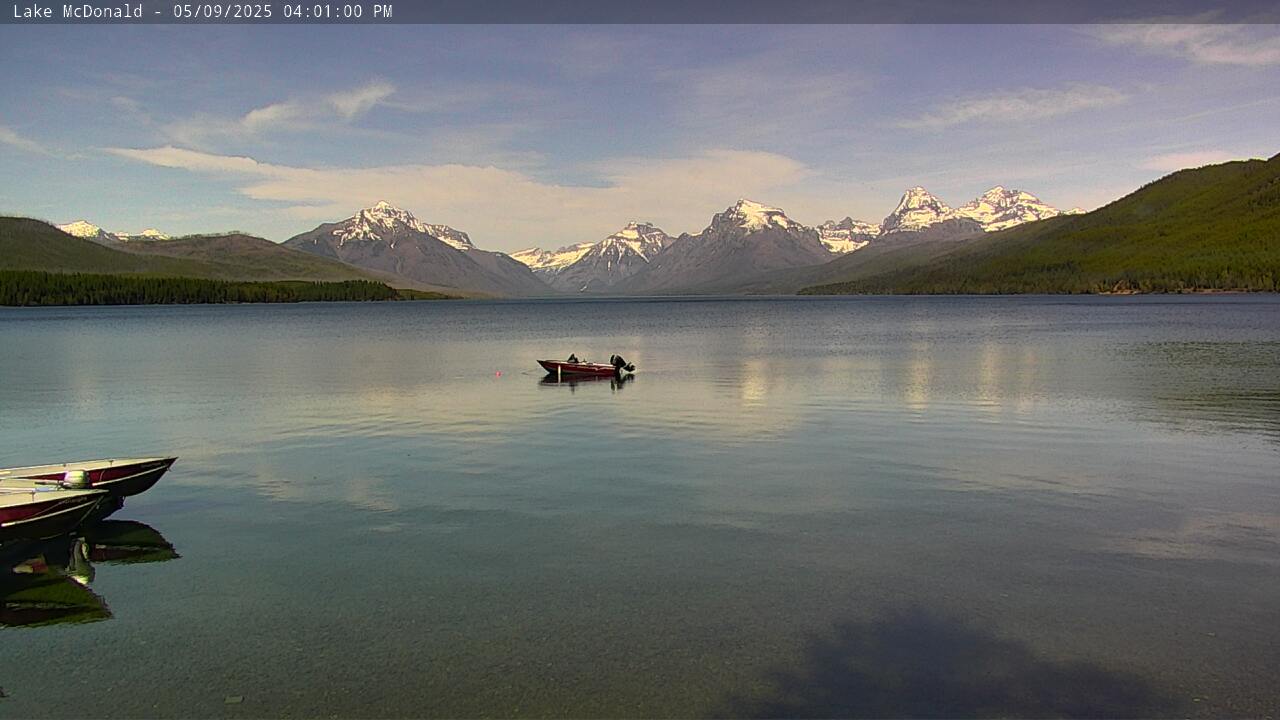
What you see: Sits on the shore at the foot of Lake McDonald, beside a boat dock, and looks up the 10-mile lake to the peaks around the Continental Divide. On a still morning the whole range is mirrored in the water.
Best time: The first hours after sunrise, before the wind ruffles the lake.
In winter: Stays useful all year. Watch the lake freeze around the edges and the snow line on the far peaks move up and down with each storm.
What you see: A pan-tilt-zoom camera on the same lake, framed tighter than the wide lake view (when we checked, it was zoomed on the mountainside above the shore). It shows forest colour and fresh snow on the slopes in more detail.
Best time: Autumn: in late October it showed the shoreline larches turning gold.
In winter: Useful for spotting fresh snow on the lower slopes; the lake itself is often grey and calm.
What you see: The main street of Apgar Village at the foot of the lake: the shops, the crosswalk and the road. It shows how busy the west side is right now and whether there is snow on the ground at village level.
Best time: Midday in summer to judge the crowds; any time to check for snow or ice on the road.
In winter: Apgar sits on the stretch of Going-to-the-Sun Road that NPS plows in winter, so this is a quick check of the road surface.
What you see: The walkway outside the Apgar Visitor Center, with its interpretive signs and the trees around the building. Close-up rather than scenic: it is the camera for ground conditions and autumn colour.
Best time: Late September into October, when the underbrush and larches turn.
In winter: The visitor center opens on winter weekends (per NPS), and this camera shows whether the walkways are clear.
What you see: The entrance booth on the road in from West Glacier, with the lanes and the forest beyond. The first view of the park for anyone arriving from Kalispell or Columbia Falls.
Best time: Summer mornings, to see whether the entrance lanes are backing up.
In winter: Shows the state of the plowed road at the park boundary on snowy days.
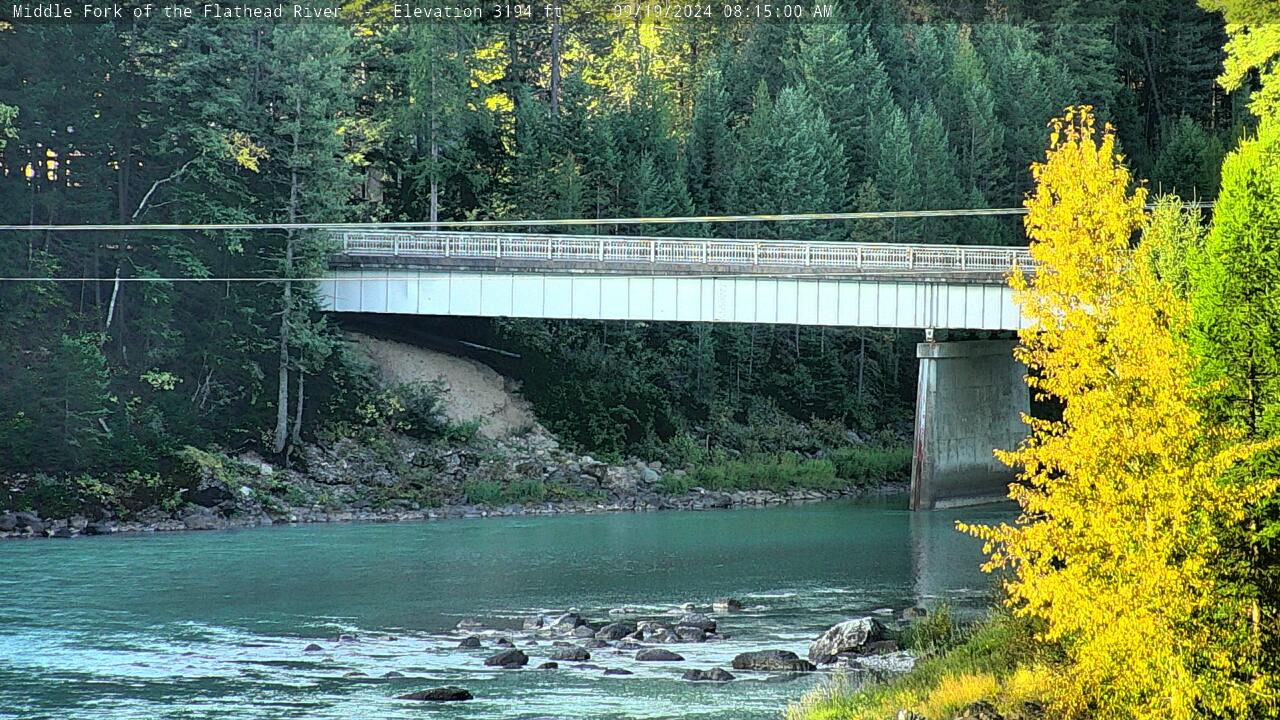
What you see: Looks down onto the clear, cobbled Middle Fork of the Flathead River by the bridge at West Glacier, the park’s southwest boundary. The river level tells you how hard the snowmelt is running.
Best time: May and June for the high spring melt; late September for the larches lining the bank.
In winter: Watch ice shelves build along the gravel bars in cold snaps.
What you see: The lawn, picnic tables and road at park headquarters in West Glacier, ringed by larch and birch. Not a mountain view: it is the plainest read of valley-floor weather, snow cover and light.
Best time: October, when the larches around the lawn turn yellow.
In winter: A dependable snow-depth gauge for the valley floor all winter.
East side: Many Glacier, St. Mary and Two Medicine
The drier, windier side of the Divide, where the mountains rise straight out of the prairie. Mornings are the time to watch here: the peaks face the sunrise.
What you see: Looks across Swiftcurrent Lake toward Mount Wilbur and the Swiftcurrent Valley, in the heart of Many Glacier. Calm mornings put the peaks upside down in the lake, and the Conservancy notes that moose and bears sometimes walk the shore.
Best time: Sunrise and the hour after, when the east-facing cliffs glow.
In winter: The Many Glacier road typically closes for the winter, so there is no one there; if the camera keeps running it shows deep snow and, in the cold months, a frozen lake.
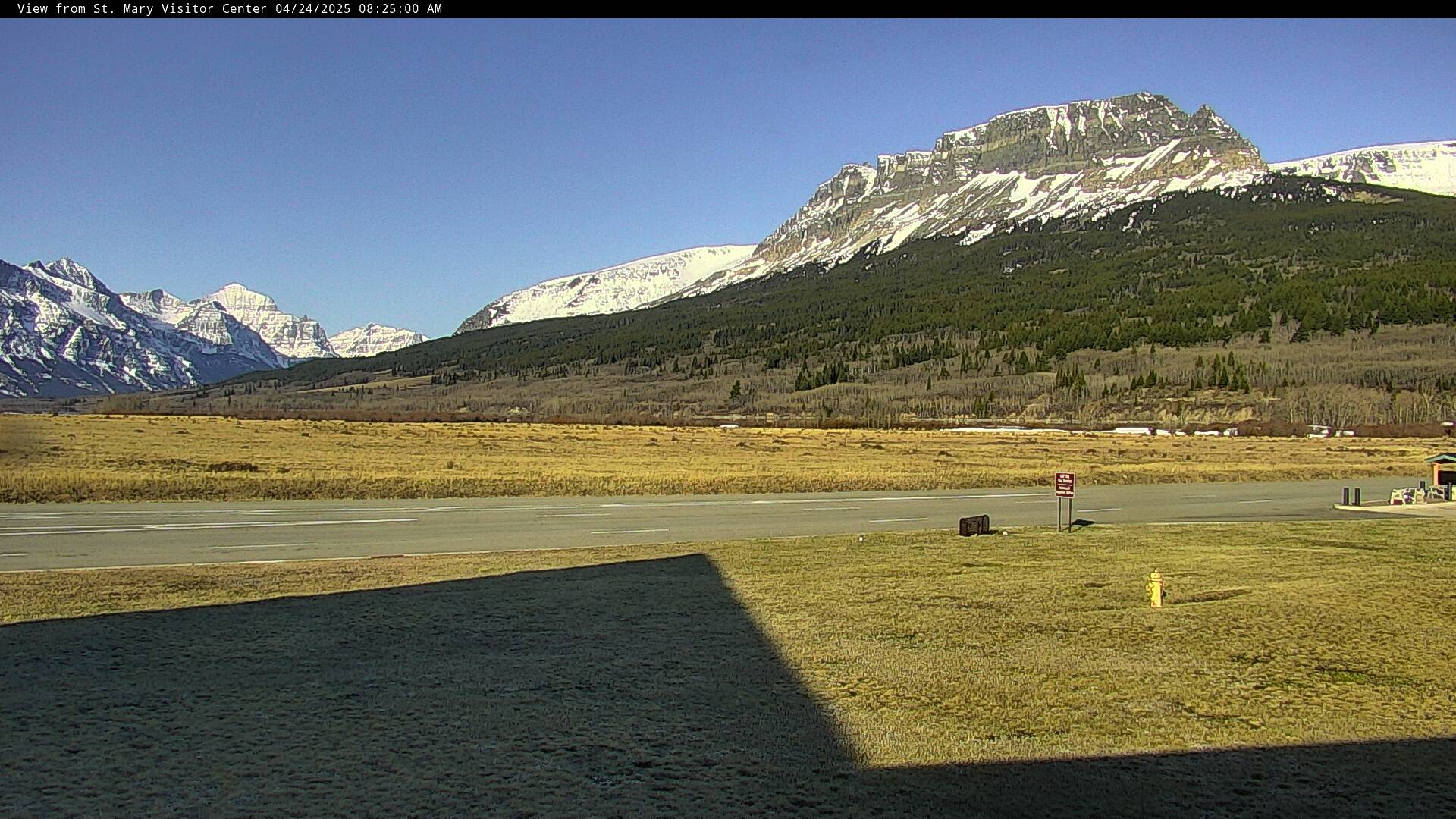
What you see: The view from the St. Mary Visitor Center at the east end of Going-to-the-Sun Road: St. Mary Lake and the steep mountains above it. Haze and wildfire smoke are easy to read here, because the mountains are close and sheer.
Best time: Early morning, with the sun on the mountain faces.
In winter: The St. Mary Visitor Center is closed in winter (per NPS), but the camera’s view of snow on the peaks stays worth a look.
What you see: The pointed bulk of Sinopah Mountain over Two Medicine Lake, in the quieter southeast corner of the park. A second Two Medicine camera, a few steps away, looks up at the mountainside behind the road.
Best time: Morning; by afternoon the sun is behind the mountain and the view goes hazy.
In winter: The Two Medicine road typically closes for the winter; the view becomes snow, forest and lake ice.
Going-to-the-Sun Road crosses the park for 50 miles between West Glacier and St. Mary and takes about 2 hours to drive without stopping. Its high point is Logan Pass, 6,646 ft (2,026 m), 32 miles from the west entrance and 18 from the east. The lower ends of the road stay open all year; the alpine section in the middle is what opens and closes with the snow.
Opening. There is no set date. Plow crews start in spring, and late storms and avalanches regularly send them back over ground they have already cleared. NPS says the road has typically been fully open by early July. Closing. It typically stays fully open until the third Monday of October, but snow can close the pass earlier, and sections can close for a day at any time.
NPS’s own record of when the road opened over Logan Pass shows how much a year can vary:
Going-to-the-Sun Road opening over Logan Pass, from NPS’s record (its latest year is 2022)
Year
Opened
Note
2015
June 19
west side to Logan Pass from June 10
2016
June 16
2017
June 28
2018
June 22
2019
June 22
2020
July 13
pandemic year; only West Entrance to Rising Sun opened
2021
June 25
2022
July 13
exceptional avalanche year
Size limits. Between Avalanche Creek and Rising Sun, vehicles and combinations longer than 21 ft (bumpers included) or wider than 8 ft (mirrors included) are not allowed, and anything over 10 ft tall may have trouble with the rock overhangs west of Logan Pass. There is no fuel in the park.
Using the cameras for it. In spring and early summer, the Logan Pass camera is the one to watch: you can follow the snow melting off the Hidden Lake Trailhead day by day. Bare ground there does not mean cars can drive up yet, though (in spring, hikers and cyclists are sometimes allowed up before cars are). The Apgar Lookout and Lake McDonald cameras show how much snow is still on the peaks at the head of the valley. Always confirm with NPS’s conditions page before you drive; NPS keeps the full record of opening and closing dates and its road information.
Best months and time of day to watch
July to mid-September is when every camera is worth opening: the road is typically open, Logan Pass is snow-free, and the meadows behind the visitor center are green.
Mid-September to October is larch season. The western larches around West Glacier, park headquarters and Lake McDonald turn yellow, which shows on the low cameras better than anywhere else.
May and June are for watching the thaw: plowing progress on the road, the Middle Fork running high with snowmelt, and the ice going out on the lakes.
Mornings win almost everywhere. Lake McDonald and Swiftcurrent Lake are most often glassy just after sunrise, the east-side peaks face the sunrise, and on summer days the clouds tend to build on the high peaks as the day warms.
Midday is best for the Apgar Lookout view, when the whole lake is lit; evening brings alpenglow on the peaks seen from the west side.
Wildfire smoke can haze every view in late summer; the St. Mary and Two Medicine cameras, which look at steep, close mountains, show it most clearly.
Winter: which cameras stay useful
In winter most park roads close. NPS keeps Going-to-the-Sun Road plowed and open from West Glacier to Lake McDonald Lodge, weather permitting, and the unplowed road beyond becomes a ski and snowshoe route. The Apgar Visitor Center opens on winter weekends; the St. Mary and Logan Pass visitor centers are closed. So in winter:
For the high country:Apgar Lookout shows the snow line on the ridges and whether the far peaks are clear.
Treat with care: Logan Pass, Many Glacier, St. Mary and Two Medicine. They can frost over, show nothing but white, or stop updating. Every camera prints its time on the image: read it before you trust what you see.
The snow figures in the weather panel above are model estimates for each point, not a measurement from a snow stake; they are a guide to the trend, not a depth to plan a ski tour on. NPS’s winter visiting page has the current details.
Visiting tips the cameras can help with
Entry requirements change year to year. Glacier has used vehicle reservations in some recent seasons and not in others, and for 2026 NPS piloted ticketed shuttles and time-limited parking at Logan Pass. Check NPS for the current entry requirements before you go.
Logan Pass parking fills early. NPS says the lot usually fills by sunrise in summer. The West Entrance and Apgar Village cameras give a feel for how busy the west side is.
Check the pass before you drive up. It can be clear at Apgar and in cloud at Logan Pass, more than 3,000 ft higher; the two weather panels above show the gap in temperature and wind.
Read the time on the image. The cameras are in remote places and do drop out. A frame from hours ago looks exactly like a live one.
Fill up outside the park. There is no gasoline in Glacier.
Questions
Is there a live webcam at Logan Pass?
Yes. The Glacier National Park Conservancy runs cameras at Logan Pass, the 6,646-foot high point of Going-to-the-Sun Road; the one linked on this page looks over the Hidden Lake Trailhead behind the visitor center. Like the park’s other cameras it is a still image that refreshes on its own schedule, not video, so check the time printed on the image.
When does Going-to-the-Sun Road open over Logan Pass?
There is no set date. NPS says the road has typically been fully open by early July, and typically stays fully open until the third Monday of October, weather permitting. In NPS’s record for 2015–2022 the road opened over the pass between June 16 and July 13 (leaving out 2020, when it never fully opened). For this year’s status, use NPS’s road status page.
Can I see Lake McDonald on a webcam?
Yes, from three angles: a shoreline camera at the foot of the lake that looks up its 10-mile length, a zoom camera on the same lake, and the Apgar Lookout camera, which looks down on the lake from the ridge above Apgar.
Do the Glacier webcams work in winter?
The west-side cameras around Apgar, Lake McDonald, West Glacier and park headquarters are the useful ones in winter, because the road from West Glacier to Lake McDonald Lodge is plowed and open year-round, weather permitting (per NPS). The high and east-side cameras can frost over, show only snow or stop updating, and the roads to them are typically closed.
What time is it in Glacier National Park?
Glacier is on Mountain Time (America/Denver): MST in winter, MDT from March to November. The clock at the top of this page shows the park’s current local time.
Do I need a reservation to enter Glacier National Park?
It depends on the year. Glacier has used vehicle reservations in some recent seasons and not in others; for 2026 NPS said vehicle reservations would not be required, and piloted ticketed shuttles and time-limited parking at Logan Pass instead. Check NPS for the current entry requirements before you go.
We use cookies for analytics and ad personalization. Decline keeps the site working;
Accept helps us improve and supports our free streams.
Learn more.