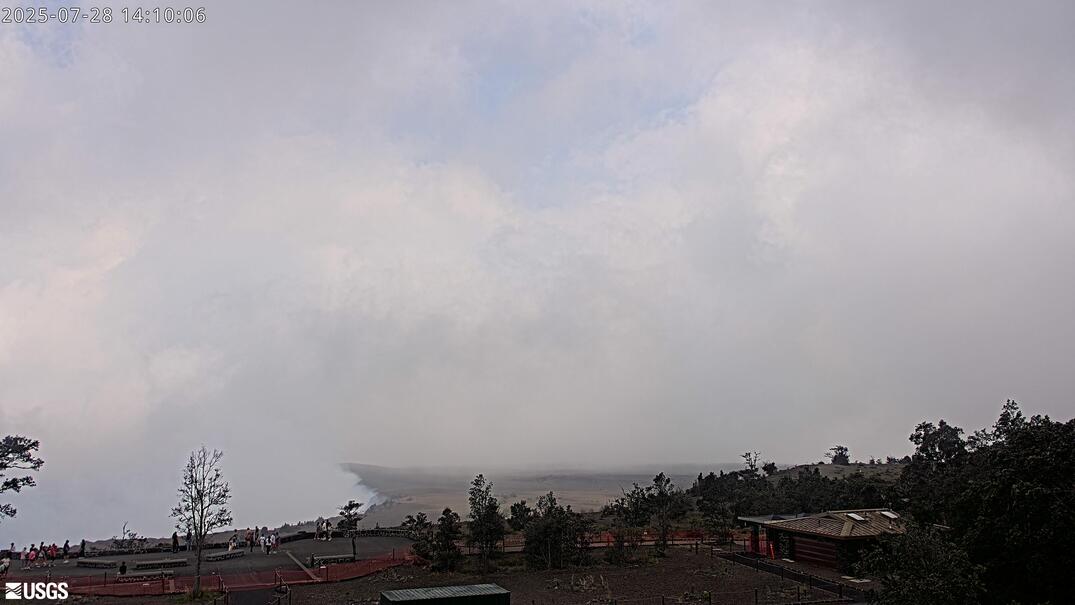
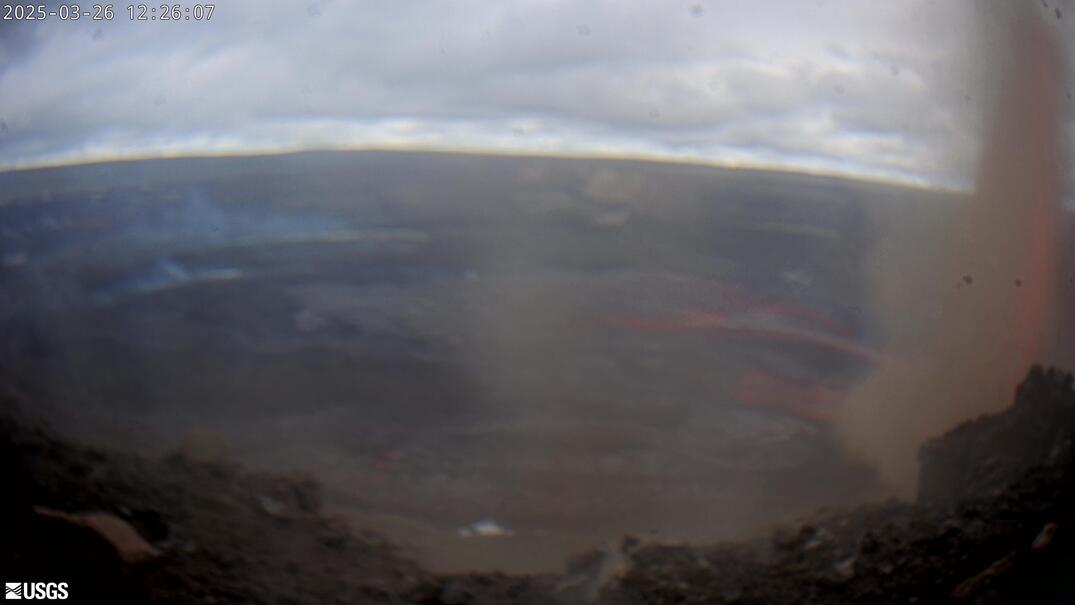
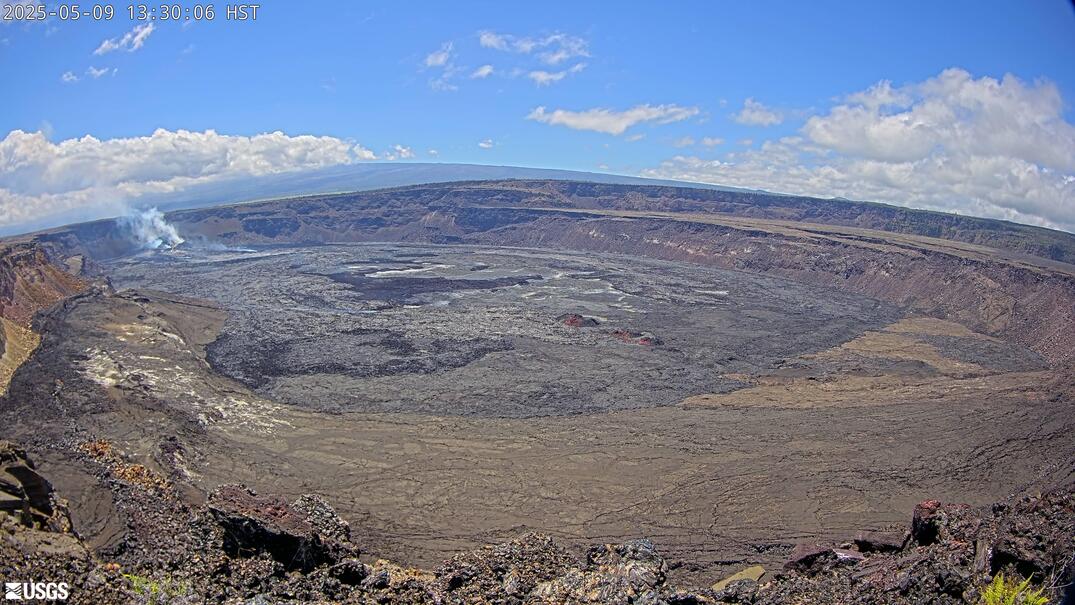
How to tell from the camera if it is erupting
- Fountains or moving lava. During an eruptive episode you can see lava fountaining from the vents and spreading across the crater floor, and at night the whole view glows. If you see that, it is erupting, whatever the time.
- A strong orange glow after dark. Glow lights the gas plume and the crater walls from below. A faint glow on the floor during a pause is lava from the last episode still cooling, not a new eruption; the National Park Service describes exactly this on its eruption-viewing page.
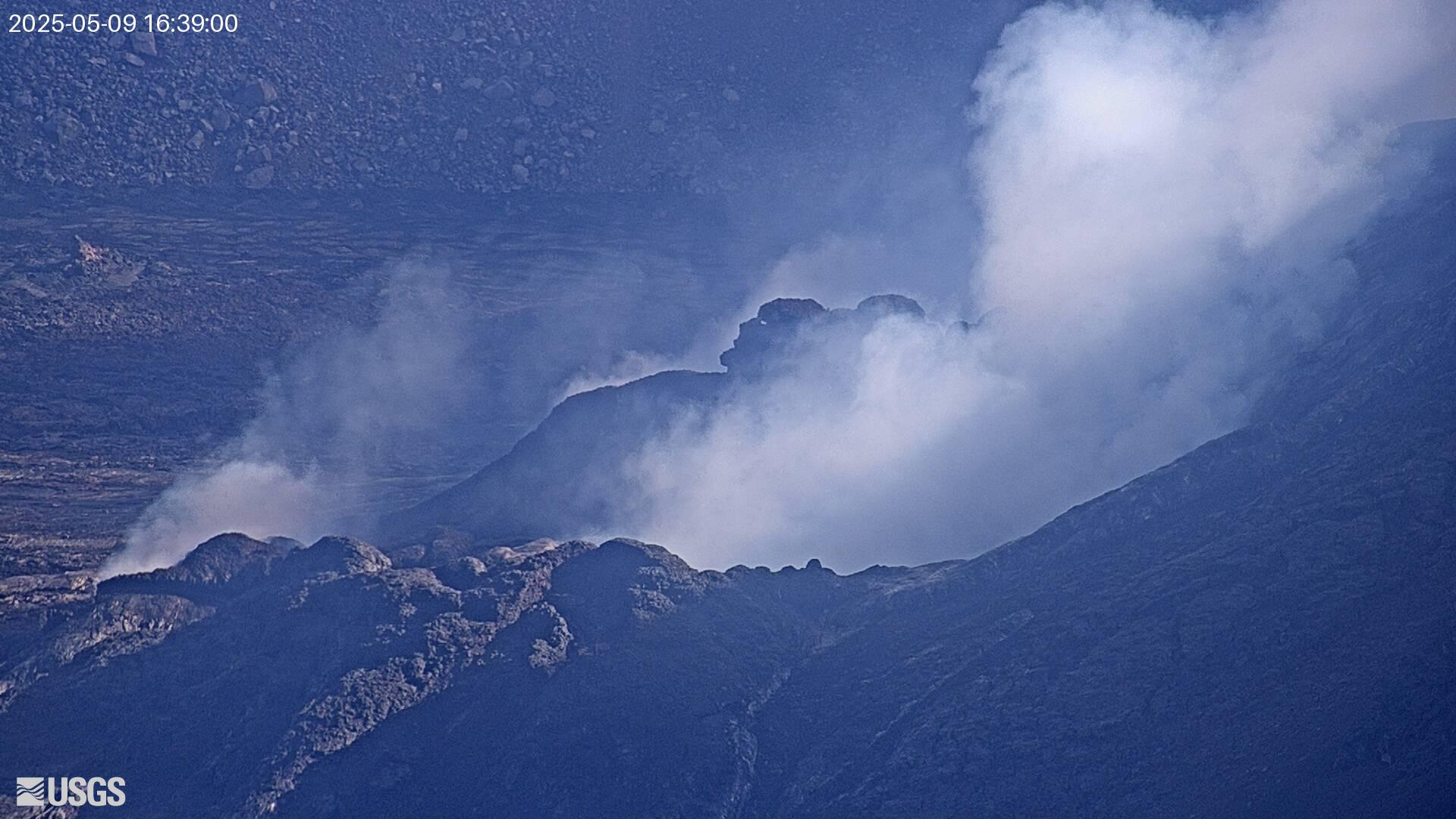
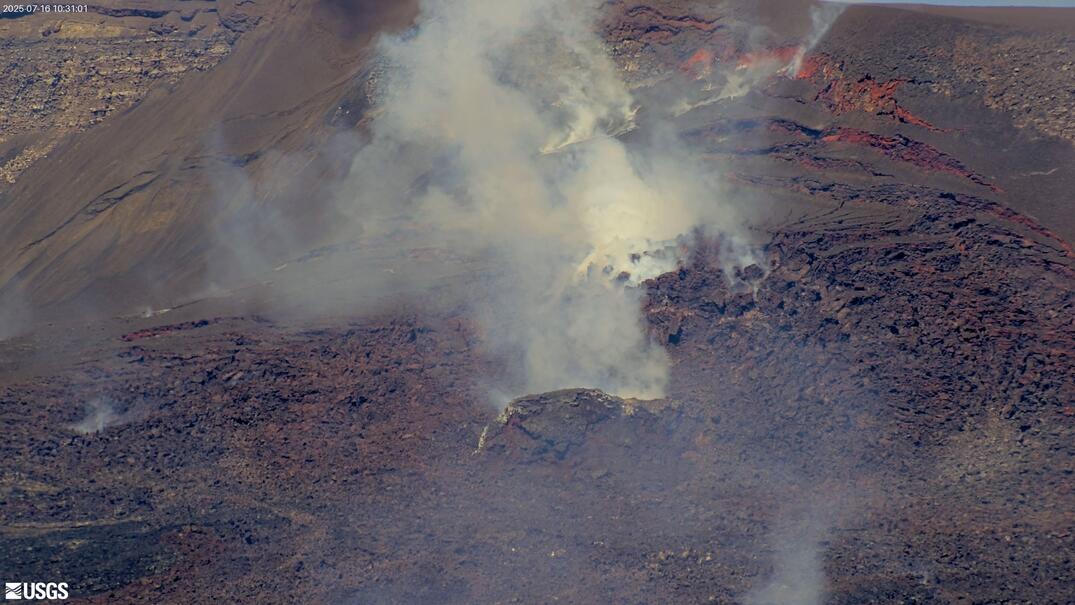
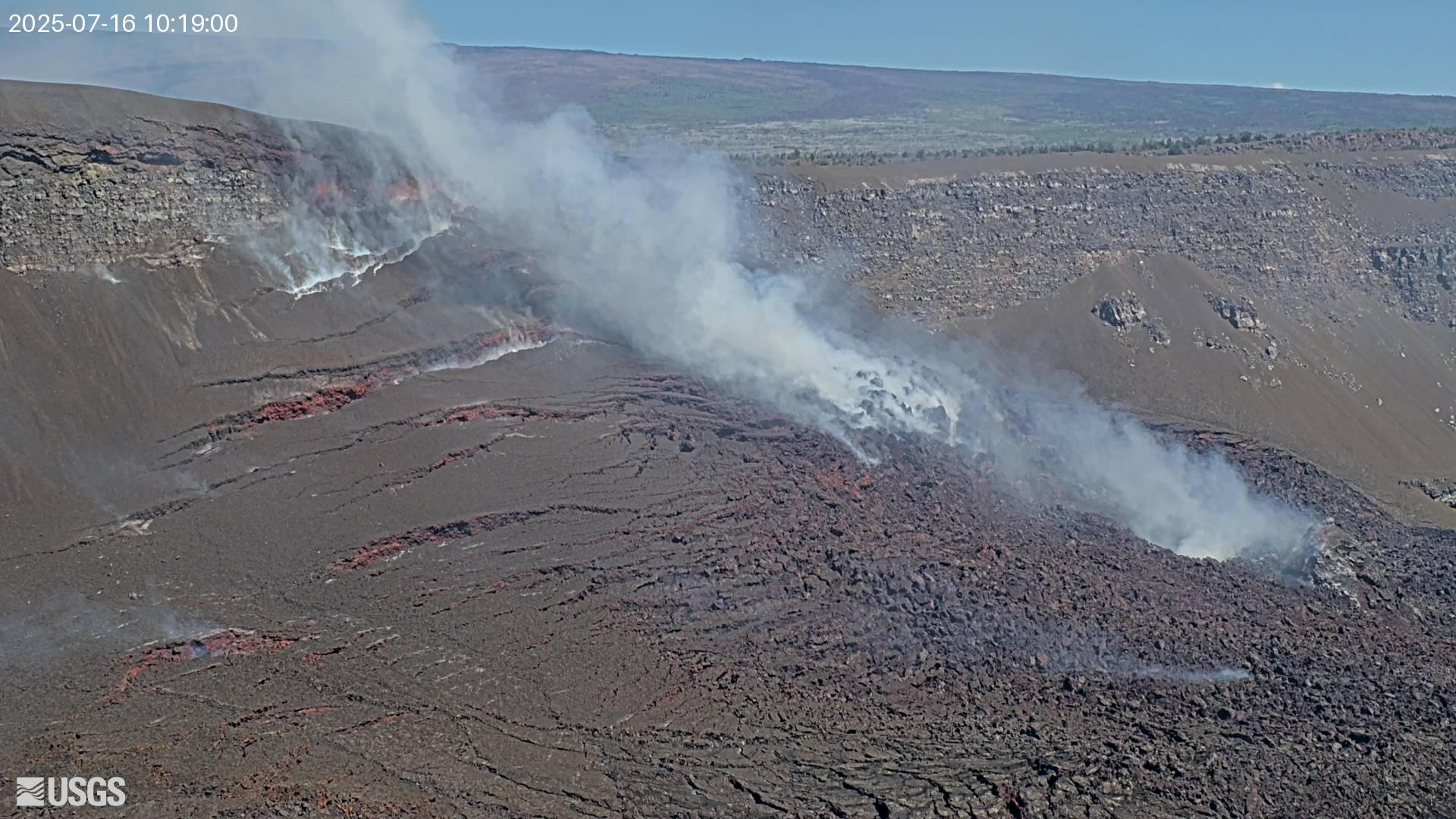
- The plume by day. In daylight lava is hard to see on a normal camera. A tall, thick plume is a hint; a thin wisp of steam is normal between episodes. Low sun can tint steam orange at dawn and dusk, which is not glow.
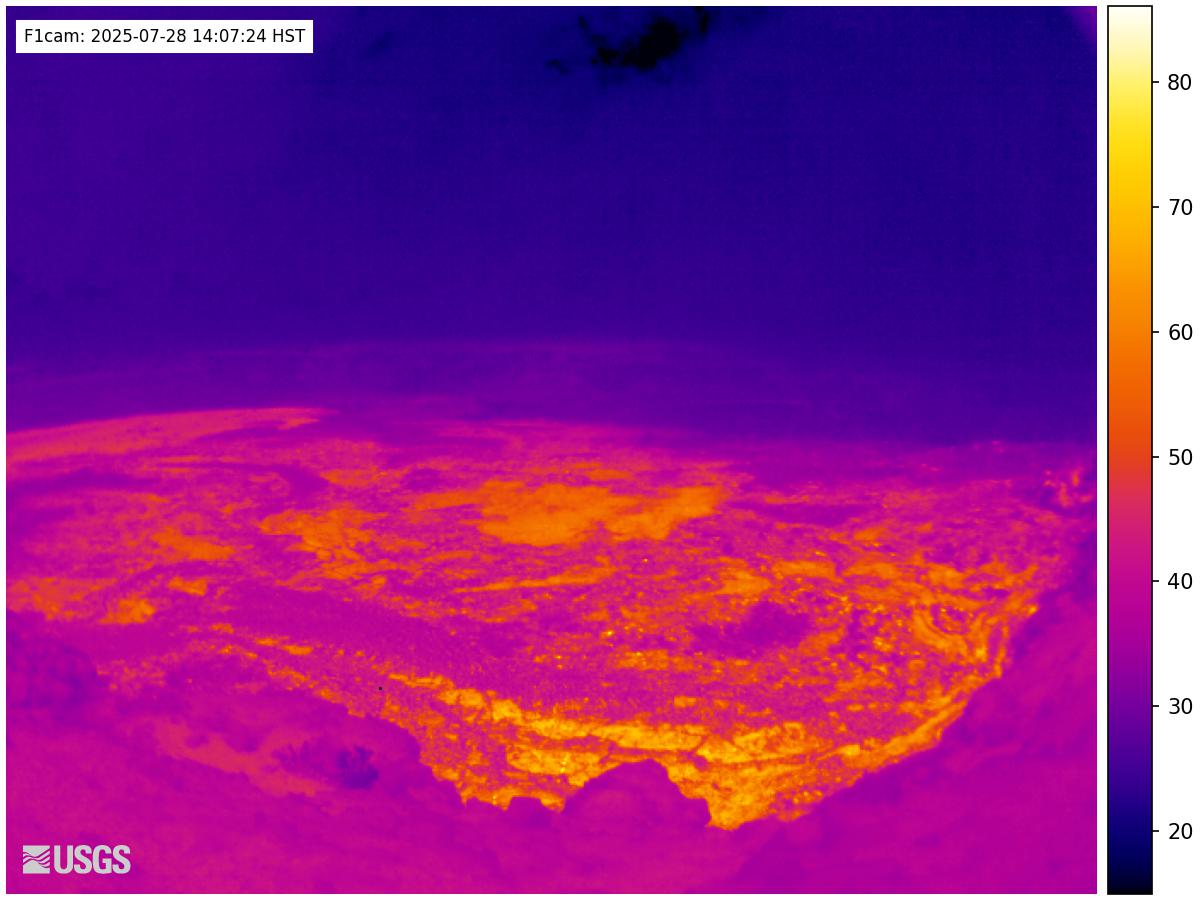
- The thermal camera. F1cam shows temperature, so fresh lava stays bright on it long after it has turned black to the eye, and it reads the same in sunshine, at night or through light fog.
- When the view is grey. Cloud, rain and vog (volcanic smog) often hide the crater. Switch to another rim’s camera, or rely on USGS’s notice above.
Best time to watch
After dark in Hawaiʻi. Hawaii keeps Hawaii-Aleutian Standard Time (HST, UTC−10) all year, with no daylight saving, so the dark hours of roughly 7 PM to 5 AM HST are 05:00 to 15:00 UTC: evening into the small hours on the US West Coast, from around midnight into the morning in the eastern US, and morning to early afternoon in much of Europe. The clock above gives the time in Hawaiʻi now and works out those hours in your own time zone.
Between episodes there is little to see at night, so the useful habit is to check the status first. USGS’s daily update usually says what the summit is doing and, during this eruption, has often given a forecast window for the next episode.
What the alert level and color code mean
USGS gives every monitored US volcano two ratings: a volcano alert level for hazards on the ground, and an aviation color code for hazards to aircraft. Neither one is a yes-or-no answer to “is lava coming out right now”: an episode can begin and end within hours, so read the notice as well.
USGS volcano alert levels | NORMAL | The volcano is in its usual non-eruptive background state, or activity has stopped after a higher level. |
|---|
| ADVISORY | Unrest above the known background level, or activity that has dropped off a lot but is still watched for a renewed increase. |
|---|
| WATCH | Heightened or escalating unrest with a greater chance of eruption, or an eruption under way that poses limited hazards. |
|---|
| WARNING | A hazardous eruption is imminent, under way or suspected. |
|---|
| UNASSIGNED | There is not enough information to judge the volcano’s state. |
|---|
Aviation color codes | GREEN | Normal, non-eruptive state, for aviation. |
|---|
| YELLOW | Unrest above background, or activity that has dropped off but is still being watched. |
|---|
| ORANGE | Heightened unrest with a greater chance of eruption, or an eruption with little or no volcanic ash. |
|---|
| RED | An eruption is imminent or under way with significant ash in the air. |
|---|
Definitions condensed from USGS’s alert-level page.
Seeing it in person
Halemaʻumaʻu is inside Hawaiʻi Volcanoes National Park on the Big Island, about 45 minutes’ drive from Hilo. The park is open 24 hours a day, so you can be on the rim after dark. The crater and the area around the vents are closed, but the eruption can be seen from overlooks along Crater Rim Drive; the park names the Kīlauea Overlook and Uēkahuna areas as the places with more parking during an episode.
Before you go, read the park’s eruption-viewing page and USGS’s update. Expect crowds and full parking lots while lava is up, and nothing at all to see during a pause apart from steam. The summit is at 4,091 feet (1,247 m), so nights are cool and often wet: bring a layer and a rain jacket. Volcanic gas is a real hazard for people with heart or breathing problems, for pregnant women and for young children; stay behind the barriers, because the crater rims are unstable.
Kīlauea’s recent eruptions, briefly
- 1983–2018: the long eruption of Puʻuʻōʻō on the East Rift Zone.
- 2018: a large eruption in the lower East Rift Zone destroyed hundreds of homes, while the summit collapsed and Halemaʻumaʻu became far deeper.
- 2019–2020: a lake of water slowly formed at the bottom of the deepened crater.
- December 2020 to 2023: lava returned to Halemaʻumaʻu, boiling the water lake away, in a series of summit eruptions that built lava lakes on the crater floor.
- Since 23 December 2024: an eruption inside Halemaʻumaʻu that comes in episodes: lava fountaining for hours, then a pause of days while the summit re-inflates. USGS numbers each episode; by October 2026 the park’s eruption page counted more than 50.
For the authoritative record, see USGS’s Kīlauea page.
Questions
Is Kīlauea erupting right now?
As of Tue, Oct 27, 8:10 AM HST, the USGS Hawaiian Volcano Observatory put Kīlauea at alert level ADVISORY (aviation color code YELLOW) and said: “The Halema'uma'u eruption of Kīlauea remains paused following episode 55 on October 17. The forecast for episode 56 fountaining has been pushed to Nov. 1-7, 2026.” This page re-reads USGS each time it is opened.
Does an orange or yellow alert mean lava is erupting?
Not by itself. The alert level (Normal, Advisory, Watch, Warning) and the aviation color code (Green, Yellow, Orange, Red) describe hazard and unrest, not whether lava is out at this minute. Kīlauea’s summit eruption has been episodic, with fountaining that can start and stop within hours and pauses of days in between, so read the notice text and look at the cameras.
How can I tell from the webcam if Kīlauea is erupting?
During an episode you see lava fountains, flowing lava and a strong glow, best at night. During a pause the crater floor is dark by day; at night a faint glow from cooling lava can remain, which is not an eruption. The thermal camera (F1cam) shows hot ground in any light, and USGS’s notice says whether an episode is under way.
What time is best to watch the Kīlauea cams?
After dark in Hawaiʻi, roughly 7 PM to 5 AM Hawaii-Aleutian Standard Time (HST, UTC−10, with no daylight saving). That is 05:00 to 15:00 UTC. Glow and fountains stand out at night; by day you mostly see the gas plume.
Can I see the eruption in person?
Often, yes, from the open overlooks along Crater Rim Drive in Hawaiʻi Volcanoes National Park, which is open 24 hours a day. The eruption itself is inside a closed area of Halemaʻumaʻu crater. Check the National Park Service’s eruption-viewing page and USGS’s update before you drive up, because fog, rain, volcanic gas and crowds all change what you will see.
Who runs these cameras?
The U.S. Geological Survey’s Hawaiian Volcano Observatory, which watches Kīlauea around the clock. Port of Cams shows their public livestreams and stills on one page; the status and every notice quoted here are USGS’s.