Share your scenic view.
Bring your coastline, harbor or mountain view to Port of Cams.
Explore camera hosting →

Browse our live northern lights webcams below. Each feed updates continuously with the latest frame from the source. Click any camera to open the full page with weather data, location context, and related feeds.

Live all-sky aurora borealis cam from the UAF Large Animal Research Station north of Fairbanks, Alaska. Watch the northern lights dance in real time during the active season (September–March). Dark skies, zero light pollution. Powered by Explore.org.

Explore.org camera on Dumpling Mountain above Brooks Camp in Katmai National Park, looking out over Naknek Lake and the Brooks River. A bear cam by day; on dark autumn and winter nights it is one of the few live video views of the Alaskan sky. At 58.6°N it usually needs Kp 4 or more for aurora.

Live 24/7 all-sky aurora cam from Posio in Finnish Lapland, deep inside the auroral oval. Watch the northern lights paint the sky above the boreal forest and frozen lakes. Active season late August–April. Midnight sun replaces the aurora in summer.

Real-time colour all-sky image from the University of Alaska Fairbanks Geophysical Institute’s digital all-sky camera at Poker Flat Research Range, 50 km north-east of Fairbanks. A fisheye view of the whole sky, horizon to horizon; aurora shows as green bands and arcs. It is a science instrument, so by day the image is washed out white; it is worth opening after dark from late August to April.

Live north-facing sky camera at Sodankylä in Finnish Lapland, run by the photographer Samuli Korvanen (Starlapland). It looks over the boreal forest toward the northern horizon, where the auroral oval usually sits on a quiet night. Sodankylä is at 67°N, so a Kp of about 2 is often enough. Dark enough from late August to mid-April; midnight sun from late May.

Real-time all-sky image from the University of Alaska Fairbanks Geophysical Institute camera at Toolik Field Station, on the North Slope beyond the Brooks Range and the Dalton Highway’s Atigun Pass. At 68.6°N the auroral oval is overhead on quiet nights, so even Kp 1 can fill the frame. Monochrome science image; dark from late August to mid-April.

Live north-facing sky camera at Levi, the ski resort in Kittilä, Finnish Lapland (Starlapland / Samuli Korvanen). At 67.8°N Levi sits under the auroral oval on most active nights; Kp 1–2 can put aurora in the northern sky. The camera is a sky view, so expect stars, cloud and resort glow on quiet nights.

Live north-facing sky camera at Kilpisjärvi, the village at the tip of Finland’s "arm" near the Norwegian and Swedish borders (Starlapland / Samuli Korvanen). At 69°N it is one of the best-placed aurora cameras in Europe: aurora is often overhead at Kp 1, and the fells keep it far from city light.

Live aurora camera on top of Luosto fell in Pyhä-Luosto, Finnish Lapland, run by Visit Pyhä-Luosto. A fell-top view of the sky over the national park, far from town lights. The best viewing is from dusk to early morning, September to April.

Live sky camera at Överkalix in Swedish Lapland, on the Kalix river just south of the Arctic Circle. Run by a local aurora guide. Sitting at 66°N, it usually needs Kp 2–3 for aurora overhead and can catch it low in the north at Kp 1–2 on dark, clear nights.

Live view over Lake Hornavan, Sweden’s deepest lake, from Hornavan Hotell in Arjeplog, Swedish Lapland, with Mount Galtis on the far shore. It is a lake view rather than an all-sky camera, so aurora shows when it is bright enough over the hills; the stream plays background music.

Live northern lights camera at the Lyngen North glass-igloo hotel on Lyngen fjord, about three hours’ drive north-east of Tromsø. The on-screen panel shows the camera’s direction, the sun’s altitude, moon brightness and the latest DSCOVR solar-wind reading. At 69.8°N aurora is often overhead at Kp 1–2.

Real-time colour all-sky image from Abisko in Swedish Lapland, one of the all-sky cameras in the EISCAT 3D region whose latest frames the University of Alaska Fairbanks Geophysical Institute publishes. Abisko sits beside Lake Torneträsk in a rain shadow known for clear skies, at 68.4°N under the auroral oval. The fisheye covers the whole sky; aurora shows as green bands and arcs.

Live east-facing aurora camera from Smørpundfjellet above Nordkjosbotn, at the head of Balsfjord about an hour south-east of Tromsø. Inland from the coast, so it often stays clearer than Tromsø itself. Kp 1–2 is usually enough at 69°N.

A family’s live camera at their home on the Arctic Circle in Swedish Lapland, looking over a lake and the forest beyond. They measure snow depth there for the Swedish weather service. Midnight sun in June, polar-night twilight in December, and aurora over the treeline on clear nights from late August to April at about Kp 2.

Live 4K sky camera from a remote cabin on the Aðaldalshraun lava field in North Iceland, between Húsavík and Akureyri, run by Geimfarinn. North Iceland lies close under the auroral oval and is often drier than the south-west, so it is a good one to check when Reykjavík is clouded in.

Live sky camera from Aurora Reykjavík, the northern lights museum in the Grandi harbour district. It shows the sky over the city through the dark season. City lights wash out faint aurora here, so it shows the brighter displays best; Kp 3 and up is a good sign.

Tromsø Havn’s own live camera over the city-centre harbour and Tromsøysundet. A city view rather than a sky camera, but Tromsø is at 69.6°N under the auroral oval, so bright displays show above the harbour lights on clear nights from September to March.

Live aurora camera on the Golden Circle in South Iceland, run by Aurora Reykjavík. The operator does not publish the exact site; it is out in the countryside east of Reykjavík, so the sky is darker than the city camera’s. Map position is approximate.

Live camera at Hólar in Hjaltadalur valley, Skagafjörður, North Iceland (TokAir Iceland). A rural valley far from city light: northern lights in winter, the midnight sun in June. The chat is subscriber-only; the stream is public.
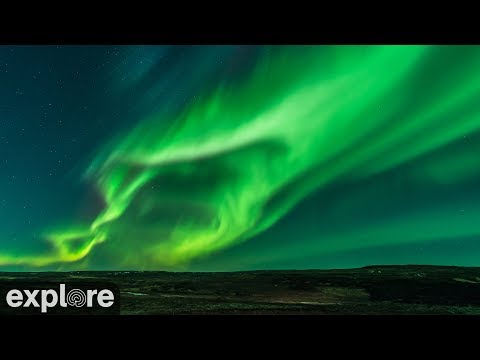
Live northern lights camera from Churchill, Manitoba, on Hudson Bay, run by explore.org. Churchill is far south in geographic terms (58.7°N) but sits right under the auroral oval because of where the magnetic pole is, so aurora is often overhead at Kp 1–2.

Live sky camera from Kaleido Lodge, a wilderness lodge outside Whitehorse in the Yukon. When the aurora is out it can appear right over the lodge; Kp 2–3 is usually enough at 61°N. Long summer twilight means no aurora from about mid-May to mid-August. Map position is approximate.

Live 24/7 sky and weather camera from Saint-Thomas-d’Aquin near Saint-Hyacinthe, Quebec, run by AuroraQC to catch aurora when it reaches southern Canada. At 45.6°N it takes a strong storm, around Kp 6 or more, for aurora to show here, and then mostly low in the north.

Live camera from the Nuussuaq district of Nuuk, Greenland’s capital, looking west across the fjord toward Akia. Night settings are tuned for aurora. Nuuk lies under the auroral zone, so aurora is common on clear winter nights even at low Kp.

Live wide-angle night-sky camera at Budle Bay on the Northumberland coast, facing north-west toward Holy Island (the lump on the horizon is Lindisfarne Castle) and the lights of Berwick-upon-Tweed. Built for meteors, it also catches the northern lights during geomagnetic storms; at 55.6°N that takes about Kp 5–6.

Greenland Airports’ live camera looking east from Kangerlussuaq airport, up the valley toward the ice sheet. Kangerlussuaq sits at the head of the long Kangerlussuaq Fjord with a dry inland climate and some of the most reliable clear skies in the Arctic, under the auroral oval at 67°N. Aurora is common here even at Kp 0–1.

Greenland Airports’ live camera looking west from Kangerlussuaq airport, down the valley toward Kangerlussuaq Fjord. With the east camera it covers most of the sky over Greenland’s driest, clearest aurora spot.

Live north-facing camera on Mt. Katahdin from Millinocket Lake in northern Maine, a dark-sky area, by Boston and Maine Live (low-light Sony A7S III, 24 mm f/1.4). Stars, meteors, and the northern lights when a strong storm pushes them as far south as Maine, usually Kp 6 or more. The stream carries music.

Greenland Airports’ north camera at Ilulissat airport on Disko Bay, near the UNESCO Icefjord. At 69.2°N Ilulissat is so far inside the auroral zone that on quiet nights aurora often sits overhead or even in the southern sky.
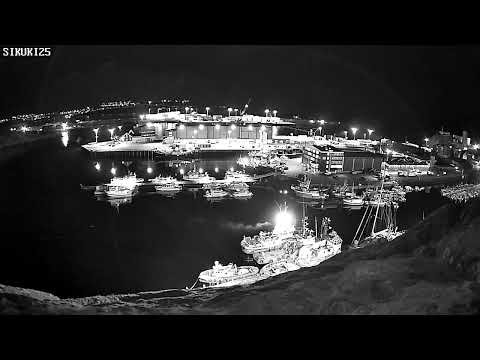
Sikuki’s live camera over Nuuk’s inner port, with the town, the fishing boats and the mountains across the fjord. A town view, so aurora shows when it is bright enough to clear the harbour lights; Nuuk sits under the auroral zone and that happens often on clear winter nights.

Sony A7S III night-sky camera at Sebec Lake in northern Maine’s dark-sky country, pointed north-north-east with an 80° view. Stars and meteors on clear nights, and aurora on the northern horizon during geomagnetic storms, usually Kp 6 or more at 45°N.

The University of North Dakota Department of Atmospheric Sciences’ skycam on the roof of Clifford Hall, looking west over Grand Forks and the Red River valley prairie. A wide, flat sky with nothing in the way; at 47.9°N, storms of about Kp 5 and above bring aurora into it.
Sell tickets for the room. Make a plan to stream your next show beyond it.
Try another place or clear your filters.
Bring your coastline, harbor or mountain view to Port of Cams.
Explore camera hosting →Plan cameras, mixer audio and a ticketed livestream. Onsite installation or remote-assisted setup, scoped for your venue.
Plan a concert livestream →